Friday, March 27, 2009


The Love Song of J. Alfred Prufrock. Eliot, T.S. 1917. Prufrock and Other Observations

In the room the women come and go Talking of Michelangelo.

A few weeks ago I visited my undergraduate alma mater, where I got a rather haphazard, mediocre education--even thought I didn't know it at the time.

Some of the science programs were serious and decent. Science majors graduated and got jobs in labs, went on to graduate programs or medical school. But most of us were majoring in humanities and the general assumption seemed to be that we were there strictly for cultural enrichment. There was never any talk about careers or graduate programs: that was considered crass. Faculty seemed to assume that we would be taken care of: guys would go into the family business or get jobs through connections, and women would marry guys who worked in the family business or got jobs through connections. Some wouldn't even make the pretense of working: they would be "sportsmen" and ladies-who-lunch.

The goal of the philosophy department was to prepare students for careers as upper crust faux-intellectuals. We were there learn how to make conversation about Ideas and chat about interesting "philosophies"--to be polished, finished and groomed for polite society, where it was important to have things to say about Art, Literature, Philosophy and Current Events.

This wasn't so hot for me because I went to college to train for a philosophy professor job. I only found out that I hadn't gotten the training I needed when I got to grad school and was slammed.

Now that I'm an academic myself I wonder why faculty at my alma mater went along with this or why faculty anywhere would voluntarily join the race to the bottom. I suppose the thought is that we in useless humanities disciplines need to sell ourselves by making out that we provide the veneer of civilization, teach students to make conversation about Ideas and inculcate "values" so that the students we credential for upper middle class sales and office park jobs will be able to make conversation about Art, Literature, Philosophy and Current Events as popularly understood and be nice people.

But why would we go along with this? We go though the whole agonizing business of grad school, fight it out in a miserable job market, sacrifice wealth and security, because we love our chosen fields, because we want to do research and teach--like the emaciated Clark of Oxenford, riding his miserable old nag, who would gladly learn and gladly teach. We have tenure--the license to pursue research were it leads us and to teach students as we think right, to show them the wonders of our chosen fields and the pure glory of the life of the mind (as it used to be called). Why do we sell out to provide entertainment, to pander to parents and cater for student's adolescent whims, to give our customers what they imagine philosophy is rather than what we know it to be, which is immeasurably more interesting?

I'm both puzzled and outraged as I see my colleagues going this route, promoting the kinds of junk that parents imagine "philosophy" is and which students, in their immaturity and ignorance, find interesting. We discover that students are interested in this, that or the other kind of bullshit, so that is what we provide. And no one outside of our profession knows any better because they think philosophy is bullshit anyway. We're employed to provide the Discovery Channel version of philosophy so that students can make what passes as intelligent conversation and those who are on board with the agenda think this is astute, cynical and terribly clever: we will feather our nest, add positions to our department, get perks.

But for what? If we wanted this stuff we'd have gone into investment banking

Thursday, March 26, 2009


Parable

Suppose you are a smart high school senior interested in astronomy. Heading for college you look for schools with programs in astronomy, astrophysics and strong physics programs that look suitable. You discover that one of these places has a big program in astronomy and offers an undergraduate major. You apply, are accepted, and go to that college.

Now as it happens a few years earlier some members of the physics department came to the conclusion that astronomy just didn't sell. Lots of students were vaguely interested in star-gazing, but very few had the math skills to do astronomy or had any interest in developing them, and none had any real interest in going onto grad school in the field. So members of the department decided that in order to get additional positions and build their department they needed to revamp their program and offer more user-friendly courses.

So, as faculty retired or moved on, they started filling slots with new faculty whose interests were congenial to a greater number of students--including "cosmic studies scholars" and astrologers. By the time you get to this college, most members of the department are astrologers. There are courses in astronomy, physics and math but most of the courses the department offers are on casting horoscopes. The department is proudly pluralistic: it supports work in all star-related studies, including both astronomy and astrology.

Well, what do you know. You don't know much about astronomy: you're a student--you came to this college to learn about it. So you take some courses in physics and math as required, and a bunch of astrology courses, and do well. In your senior year, you have a chat with the chair about graduate programs. He suggests that you consider going into a terminal MA program to prepare for graduate work in the field.

The department at this college it turns out, is geared up to offering the kind of courses that will appeal to students who don't have any serious interest in the sciences. It is not expected that majors will continue on to grad school or pursue astronomy professionally. The aim of the department is to offer students something along the lines of the Discovery Chanel: the kind of thing the general public thinks of as science, with beautiful computer graphics in vivid color and interesting facts about the history of astronomy, without any tedious technical details--Science Lite.

This has worked out very nicely for the department: it's added new positions. But it's not so hot for you: you assumed that successfully completing an undergraduate major would prepare you for a PhD program in the field.

Of course most students who take courses in a field are not going to pursue that field professionally. But it seems to me that even if they don't, they should be getting the real stuff--not astrology, and not even the Discovery Channel. And majors should be getting the real stuff. If a department is committed to offering user-friendly entertainment or edification, it should make that clear and certainly not offer a major.

Tuesday, March 24, 2009


AIG bonuses | Salon

The right's brain trust is yelling that the tax is a bill of attainder that will scare off 'the investor class,' but GOP politicians, facing pitchfork-waving mobs who want to string up that 'investor class,' have stopped following orders. The pearl of Alfred E. Neumann wisdom from the right, priceless in its political tone-deafness, is the repeated assertion that bonuses must be paid to retain 'the best and brightest' executives. The best and brightest? Would that be the frauds and mountebanks who made gazillions of dollars on three-card-monte credit default swaps that destroyed the U.S. economy? For Americans who are warming themselves by burning their worthless 401Ks, like the starving artists at the beginning of Puccini's 'La Boheme,' the idea of rewarding these geniuses is like giving a raise to the navigator on the Titanic. This long-overdue outburst of populist rage could mark a decisive shift in Americans' attitudes toward income inequality.

Right. Populist rage and pitchfork-waving peasants. But who was responsible for this mess in the first place if it isn't the peasants who are now wielding those pitchforks?

Don't blame firms: their business is, of their essence, to maximize profit. Don't blame Wall Street fat cats: they were no more greedy than anyone else--they were just in a better position to satisfy their greed. By pure moral luck the rest of us are Cromwells innocent of our country's blood. Truth--which of us wouldn't do the same if we were in their position? People want to get as much money as they can given the amount of time and effort they're prepared to put in. There are a few kids who want to so Teach for America or go into the Peace Corps and more who say they want work for a better world, but there are very few who want to make a career of it.

Blame the voters who kept conservatives in power and pushed the country hard right. It's government's business to promote the interests of its citizens by regulating the activities of the country's self-interested agents--including firms. Citizens cannot expect firms to behave nicely: as near-omnipotent, necessarily self-interested agents they must crush any lesser being if that is in their interest. If citizens object to being crushed their only recourse is to rely upon the state to control powerful private interests on their behalf. If voters don't give the state that power then they have only themselves to blame if they get crushed.

But what were those proletarian Republicans thinking? I doubt that they were even thinking about the possibility that more powerful agents might crush them. Some were even so vain as to imagine that there were no more powerful agents than they.

They were thinking about how they could--and would--crush people further down the pecking order. They wanted to beat up on the mythic Welfare Queen who was living in luxury at their expense. They were persuaded that government as such favored people who were beneath them at their own expense. So, out of what they supposed was self-interest, they wanted government shrunk and drowned in the bathtub.

And now, mirabila dictu, ask not for whom the bell tolls: it tolls for thee. It was the deregulation and pro-business policies the Republican "base" favored that screwed over that Republican base: the white working class.

So, of course there is a volte face. Now they see that their social superiors are screwing them over and recognize that government can act in their interests so they call on government to regulate, nationalize or control big business and punish the fat cats who screwed them over. They're even prepared to sacrifice the maltruistic pleasure of screwing over others in order not to get screwed over themselves: self-interest trumps sadism.

No one dares to say that it was the lower classes who are responsible for this mess. We need their support and if pitchfork-waving populism gets them on board, that's great. And of course we good liberals are all prissy about "blaming the victim." And some of us still harbor that undergraduate Marxist romanticism about the working class, who were supposed to be "interesting" and "real"--not hypocritical, materialistic and phony like our parents.

But the bottom line for anyone honest and willing to do the calculation is that it was the lower classes who made 30 years of conservative misrule possible and destroyed the economy. They were the ones who were stupid enough to get mortgages they couldn't carry. They were the ones who imagined that they were rich because they could get go into debt to buy expensive, worthless crap and positional goods, and so supported policies that favored the rich. They were the ones who wanted to screw over the poor--until they discovered that they were poor and were getting screwed over themselves.

Sunday, March 15, 2009

God is a Utilitarian!

Public Discourse, More Government, Less God: What the Obama Revolution Means for Religion in America, by W. Bradford Wilcox
A recent study of 33 countries around the world by Anthony Gill and Erik Lundsgaarde, political scientists at the University of Washington, indicates that there is an inverse relationship between state welfare spending and religiosity. Specifically, they found that countries with larger welfare states had markedly lower levels of religious attendance, had higher rates of citizens indicating no religious affiliation whatsoever, and their people took less comfort in religion in general...How do we account for the inverse relationship between government size and religious vitality? As Gill and Lundsgaarde point out, some individuals have strong spiritual needs that can only be met by religion. This portion of the population remains faithful, come what may. But other individuals only turn to churches, synagogues, temples, and mosques when their needs for social or material security are not being met by the market or state...At times of high insecurity, such as the current recession, religious demand goes even higher...This is why, even though Obama’s audacious agenda might provide short-term relief to the economic and social challenges that now beset us, over the long term the Obama revolution is likely to erode first the religious and then the civic and moral fabric of the nation.

Here we have the true conservative argument. The welfare state is bad for religion because it makes people better off. Cut-throat capitalism promotes true religion and virtue by making people miserable, thus providing opportunities for forebearance, compassion and charitable giving.

So much the worse for virtue. If this is what virtue is all about then we're better off in a world where it can't exist--where people are secure and happy and so there isn't any need for charity or compassion. We don't imagine that there's some redeeming benefit in there being paraplegics and amputees so that we have the opportunity to design better wheelchairs and shouldn't think that poverty, misery and pain have value insofar as they provide opportunities for the cultivation and exercise of virtue.

Augustine said that in this world, after the fall, non posse non peccare, but in Heaven non posse pecare. How is this supposed to work? If intentions matter from the moral point of view this means that in Heaven we will somehow be blocked from forming bad intentions. But then what happens to free will? We got ourselves to Heaven by exercising it. God gave it to us knowing that it was dangerous because, presumably, the immeasurable benefit of free will outweighed any risk. Now we get to Heaven only to be deprived of it?

No! It is impossible to sin in Heaven because there no one can be harmed. You can have the most evil intentions in the world and act out of the deepest malice. Do what you will you can't hurt anyone because they are all invulnerable beati, tenured for eternity. By the same token it is impossible to be virtuous since there is no one for whom one may feel compassion, no one who can be an object of charity, no dangers in the face of which one may show courage and no tests of fortitude. Heaven is beyond good and evil.

It is therefore easy to understand the nature of Hell. If your intention is to do harm, you will be eternally frustrated because no one in the afterlife can be harmed. They can only, by the grace of God in conferring on us free will, harm themselves. So you can will to do harm even though in having that desire you harm yourself. It's also easy to understand why Hell can't be permanent. Eventually every soul must get it. Origen was a universalist, but so was Gregory of Nyssa and other unquestionably orthodox theologians.

But God must be a utilitarian, or at least a consequentialist--otherwise non posse peccare means monkeying around with people's intentions and so undermining free will.

Sunday, February 01, 2009


The Politics of Possible Worlds

Talking Business - It’s Not the Bonus Money. It’s the Principle. - NYTimes.com

Most people still don’t fully understand what, exactly, Wall Street did that caused so much trouble for the country and the financial system....[W]ords like “off-balance-sheet vehicles” and “mortgage-backed securities” don’t have much meaning for most of us. What we understand is greed — which, ultimately, is what Mr. Smick was talking about as well. For most Americans, big bonuses and corporate jets and office remodelings become a kind of stand-in for the real sins of the bankers. They signify what people hate about Wall Street.

But why didn't we figure this out sooner? For 30 years we loved Wall Street and applauded corporate greed. And the biggest boosters were the proles who became the Republican base. When Democrats proposed programs to help "working families" Republicans rallied the troops by accusing them of instigating "class warfare"--and the peasants came out with their pitchforks to defend the interests of corporate fat cats. Even in the wake of economic collapse, when banks were foreclosing on their trailers, the trash rallied behind Joe the Plumber, who was outraged by Democrats' proposal to raise taxes on the $250,000 a year he expected to clear from a plumbing business he imagined buying.

Of course Joe was no plumber. He was an unlicensed handyman, just scraping by, who would never be in a position to buy a lucrative plumbing business or earn $250,000 a year and likely knew it. But like his supporters, he was besotted by the vision of another possible world where he was on top of the heap and rushed to the defense of his other-worldly counterpart.

Fed on "The Lives of the Rich and Famous," soap operas, romances and tabloid accounts of celebrity affairs, the lower class junk people live counterfactually. Like the fat housewives who worshipped Princess Di, they don't resent elites whose lives are immeasurably better than theirs in virtue of plain dumb luck because they imagine that those are lives they could have lived, and defend to the death the right of others to live those lives--even at their own expense.

During the campaign, Democrats of the reality-based persuasion pointed out that the program they proposed would actually benefit Joe--not realizing that actuality was completely beside the point. Living counterfactually, wannabe plumbers, Diana worshippers and the rest of the lot, lost in logical space, were delighted that corporate CEOs, entertainers, professional athletes and princesses, whose counterparts they shared at remote possible worlds, enjoyed vast wealth and privilege.

Even Americans whose transworld aspirations were modest were modally confused. They imagined an America of family farms and small towns where neighborly druggists, insurance agents and grocers ran friendly Main Street businesses and family doctors made house calls. When Bush campaigned against an inheritance tax that would not affect the majority of Americans, cashiers and truck drivers living in suburban subdivisions rushed to his defense, fearing that this "Death Tax" would make it impossible for them to pass family farms to their children.

There is however just so much satisfaction we can get out of our counterparts' lives because possible worlds are causally isolated. What happens at those worlds of small towns and family farms, and at worlds where our counterparts are plumbing moghuls or princesses, doesn't affect us. What happens here does and now we feel the pain. Now we resent the greed of actual Wall Street money-jugglers who wiped out our actual 401Ks

Why did it take so long?

Saturday, January 24, 2009

The Church of Obama: Just For You

Matt Frei: Taming the cyber beast | Comment is free | The Guardian

The Clinton White House leaked like a sieve. The Bush White House circled the wagons and lived in a bubble; it turned loyalty into a test of service and largely disdained the clutter of opinions from the world outside 1600 Pennsylvania Avenue. If the last year is anything to go by, the Obama administration will be a curious mixture: it too will demand absolute loyalty and discretion from its staff while feeding the hungry cyber-masses with the impression of involvement.

I wandered into Obama's campaign website once looking for information about a volunteer training program for a friend that I'd heard about through my local Democratic Party organization. I never found it but by the time I had managed to extricate myself from the site I had given the Obama campaign my cell phone number and signed on to a special interest email list. I searched through page after busy page of slick web design without finding what I needed until I was so overwhelmed by the links, hype and innumerable options for social networking that I left in a state of near panic.

It reminded me of the time, at a conference in China, a group of us went to the Old Silk Market in Beijing (pictured above). It was jammed with shoppers, merchandise of every kind, and aggressive shopkeepers hustling tourists. By the time I managed to squeeze my way back to the edge of the crowd I was panicked. Once I broke free I ran the last lap at top speed to my friends who were waiting at the exit laughing: they'd been through it too and knew exactly how I felt.

I never went back to the Obama site but Barak kept in touch with innumerable emails and text messages that occasionally came in the middle of the night but more often during one of my logic classes, invariably while I was doing a especially intricate proof on the board.

The email list was worst of all. List members, at least those who posted, were convinced that they were on intimate terms with Obama, that he followed discussion on the list (or, at least, that his inner circle did and reported back to him) and looked to them for advice.

I couldn't imagine why. Manifestly there were millions of participants in Obama's social networking structure: we were just numbers. I've never minded being just a number--in fact I rather like it. What I definitely don't like is bogus intimacy--strangers with whom I do business addressing me by my first name and customized junk mail. At the Silk Market stall keepers adopted the same tactic: they assured me that they were giving me special deals because I was special--"five dollah, just for you, no, four dollah, four dollah--and just for you."

Lots of people must like it because if they didn't employees wouldn't be trained to use client's first names and junk mail wouldn't be personalized, but I can't imagine why: it seems so obviously patronizing, manipulative and humiliating.

I especially hate programs aimed at giving clients a sense of involvement by loading them with busywork. In my church this was called "empowering the laity." The assumption was that the laity were at lonely and loose ends, didn't know what to do with themselves, felt useless, isolated and of little worth. The church give them tasks to do which would get keep them occupied, boost their self-confidence, make them feel needed, and create the sense of involvement that would keep them in the fold. When I was involved in the church growth business it was a commonplace that no matter how enthusiastic new members of a congregation were they would never stick beyond a few weeks unless they were hustled into organizations and activities. Religion was ephemeral--sociability was the eternal verity.

It was a complete fake. Every profession is a conspiracy against the laity--the clerical profession in particular. Laypeople were never be heard and the only work we got to do was donkey work. Most weren't even trusted with that. Important donkey work was done by paid staff. Laypeople were given busywork and pretend work.

So, at one particularly painful vestry meeting the Junior Warden, whose titular responsibilities were grounds and facilities, told a long story about his research in local ordinances to determine whether the church door could be tethered by a spring so that it would close of its own accord or whether it had to stay open to comply with handicapped access regulations. Of course, the church employed a facilities supervisor, overlord of 4 Mexican sextons, who looked into such matters and made decisions about the disposition of doors. The Junior Warden was just being allowed to play pretend.

I found it humiliating and find the whole Obama cult creepy for the same reason. I voted for an ideology and a program: for more social safety nets and less military adventurism, for a more activist government, for the agenda of the left. Obama was the icon of that program, the button you pushed to get it. As a voter, I made my goals for the country known by pushing the Obama button.

I'm no expert. I don't know how to implement the objectives of the left, I don't understand the means to the ends I support, or the details and, frankly, I'm not interested. I just want a result. I want that program to pop out of the black box of government and don't want to know what's going on inside. So I'm glad that Obama has appointed a team of experts and technocrats to work on those details inside the black box. I don't want to be involved. What I resent isn't beng locked out of the black box but these attempts to create the illusion of involvement.

People of normal intelligence can't really believe that Obama or his advisors are really paying any attention to what they say and, if they don't, I can't see how they could fail to be outraged by this humiliating, patronizing treatment--the hype, manipulation, vacuous slogans, contrived sentimentalities and pieties, and slick packaging.

I suppose if the church didn't exist it would have to be invented

Tuesday, January 06, 2009


Eat Shit, Caroline
Caroline Kennedy, mommy wars, New York Times | Salon Life
In this past Sunday's New York Times Magazine, contributing writer Lisa Belkin made a comparison between the plight of Caroline Kennedy, a New Yorker who never committed to a particular career path and is now hoping Gov. David Paterson will appoint her to Hillary Clinton's Senate seat, and Whitney Hoffman, a mother who has stayed at home with her kids for more than a decade, worked on a variety of professional projects, but is now nervous about how to return to the workplace full-time. Responding to critics' cries that John F. Kennedy's daughter is inexperienced and unqualified for the Senate job, Belkin links Kennedy's quandary to that of the many former professional or professionally educated women who were part of what Belkin dubbed the "opt-out revolution" five years ago, some of whom are now trying to make their way back into the ranks of the gainfully employed.

Woozy, woozy, girlies. You wanted your 13-year Mommy "Sabbaticals" and now you want to jump off into good jobs? No sympathy for me. I have three kids and took off exactly one week with each of them--the same time my husband took off. I have never done anything for or with my kids that a "traditional" male wouldn't do: I was a female father. I have no sympathy for women who want to be Mommies.

As if that weren't bad enough, here is Caroline Kennedy who not only wants to jump back into the labor force after assing around for all her adult life, but wants to be a senator. Give me a break. Caroline didn't have to opt out: she had the money to buy half a dozen nannies and other servants to do the mommy work and housework for her. But of course, why should she bother? If you've got money you don't have to work, so why bother working? And if you're a woman you can always make smarmy noises about doing your mommy jobbie--and get kudos for it.

You pays your money and you takes your choice. It's not easy to behave like a man if you're a woman: I didn't have the support services my male colleagues had. They could just roll out of bed, grab a cup of coffee and get to their 8 am classes. I had to get the kids dressed, pack little lunches for them and get them to childcare because, unlike them, I didn't have a wife to do it. But I did it.

If women want to opt out that's fine with me. As long as they don't expect to opt back in again.

Apologies: I quit smoking on the 1st and at this point I hate everyone and the entire universe. But, even in the best of circumstances, I don't think I'd be favorably disposed to Caroline Kennedy--a rich brat with an inflated sense of entitlement.

Monday, December 22, 2008

Humanist Pseudo-Church

Humanist Parents Seek Communion Outside Church - washingtonpost.com

Dozens of parents came together on a recent Saturday to participate in a seminar on humanist parenting and to meet others interested in organizing a kind of nonreligious congregation, complete with regular family activities and ceremonies for births and deaths...People often ask, "How do you expect to raise your children to be good people without religion?" said Dale McGowan, the seminar leader and author of "Parenting Beyond Belief." He suggested the retort might be something like, "How do you expect to raise your children to be moral people without allowing them to think for themselves?" He advocates exposing children to many religious traditions without imposing any. At the seminar, Andrea Proctor was thrilled to meet another mother who would like to start a group of parents and children meeting weekly or biweekly. "We just put a huge pool in our back yard," Tony Proctor said. "We might have to start humanist barbecue pool parties."

So, why don't they just go to church and just not believe it? What's the problem?

These made-up semi-religions never thrive. I suppose part of the story is the fact that they're intentionally contrived. Secular people see that churches have products on offer that meet important secular needs--social involvement, rites of passage and social control (aka "values")--form social organizations, concoct rites of passage, and establish programs to train their children.

But I don't think that's the whole story. The cult of Serapis was concocted but within a generation devotees, and others, were convinced that it was of high antiquity. Mormonism was completely made up but immediately dug in and Mormons are now a virtual ethnic group.

When religion is alive you don't get humanist pseudo-churches. Where religion as a social institution is alive everyone knows the myths, participates in the cult and talks the talk, regardless of what they believe. Some are enthusiasts and some are skeptics but most are indifferent and take the cult as part of the fabric of social life. What did the Greco-Roman pagans believe by the first centuries AD? Lots of different things, but even Epicureans and skeptics participated in the traditional public cults. They didn't establish metaphysically detoxified cults with secular barbecues in place of sacrifices to the gods.

Humanist pseudo-churches only arise when religion collapses--when the language and myths are no longer current, when the cult dies out and religion is privatized as a matter of conviction--a package of beliefs and moral commitments. Then secularists sort through the wreckage to salvage the bits they think are worthwhile and refurbish them.

But by then there isn't much market for these spare parts or the pseudo-churches constructed out of them because by then a variety of secular institutions that satisfy needs for social contact, rites of passage, holidays and customs, and social control are well established. Kids are socialized in pre-schools and play groups, and in all manner of organized activities in which middle class parents enroll their children. There are innumerable secular social activities, civic organizations and opportunities for volunteer work for adults and a secular liturgical year that includes Super Bowl Sunday, Fourth of July, Halloween and Thanksgiving. Christmas has been thoroughly detoxified: Santa, Rudolph, snowmen and candy canes have driven out shepherds, angels and Baby Jesus. Maybe most importantly, religious belief and behavior is no longer required or expected: people no longer feel that they ought to be dressing up and going somewhere on Sunday mornings.

Who are the minority who seek out secular churches and Sunday schools? I suspect they're people in transition, people who come from religious families or live in subcultures that haven't yet become thoroughly secularized--people who feel they should be dressing up and going somewhere on Sunday mornings, and who feel defensive about their lack of religious convictions. The article notes:

A recent study found that many Americans associate atheists with negative traits, including criminal behavior and rampant materialism.

How many Americans? Which Americans? Not Americans I know. In my world the very word "atheist" sounds peculiar because atheism is the default, something hardly worth mentioning. Theism is anomalous. No one I know feels he ought to be dressing up and going somewhere, other than brunch, on Sunday mornings and no one has any interest in secular pseudo-churches. Church-going is just not done. The Americans I know associate religious believers with of negative traits, including ignorance, bigotry, prudery and political conservatism.

So, in my world, I'm on the defensive. Coming out at work I was immediately branded as a member of the "Forces of Reaction"--in precisely those terms. But certainly the New Atheists protest too much.

A room full of concertedly nonreligious people has its idiosyncrasies. At the seminar, someone sneezed, and there was a long silence -- no one said "Bless you" or even "Salud" or "Santé." For sale were T-shirts saying "98% Chimpanzee" or showing a tadpole with the words "Meet Your Ancestor." There were also children's games from Charlie's Playhouse, a Darwinian toy company, illustrating the process of evolution.

Jesus, do they also censor swearing? "Meet Your Ancestor"? Why not "2 + 2 = 4" or, better, "Pi = 3.1416..." since, as I understand it, some cranks once tried without success to get the Biblical figure, 3.0, accepted as the value of Pi? I went to an ordinary public school and watched TV. I saw innumerable films at school and educational TV shows as a child showing Life emerging from the primordial soup as lightening struck the primitive oceans and lungfish crawling out onto the land.

This is what everyone got as part of elementary education and popular culture and was never intended to Make A Statement in the way that the T-shirts and Darwin-toys are. If there were fundamentalists around I suppose they compartmentalized it--the Garden of Eden and Noah's Ark, life emerging from the primordial soup and lungfish. It simply wasn't an issue.

So, by the time humanist pseudo-churches emerge from the ruins of ordinary religion, there are few takers. This secular faux-religion is parasitical on real religion, emerges when religion is dying out and then dies with it.

Saturday, December 20, 2008


Wither Feminism?

We are a group of professionals from various disciplines who study women's place in the economy. We are collecting signatures to a letter to President-Elect Obama concerning jobs for women at the following site. Please go there to sign and forward it to people who would like to join in the effort.
http://www.ipetitions.com/petition/genderequity

A while ago I was invited by a colleague to be on a panel discussing "Feminist BS." I did my research and, armed with the latest data on discrimination, sex segregation in the labor force, and male-female wage gaps, sallied forth to enter the fray.

The venue, as I discovered, was a small theater with black walls and various avantgarde accoutrements. The panel consisted of me and another female academic, an extremely tribal gay guy and the drama critic of the local PBS radio station who was dressed in a witchy/ethnic outfit I suspect she ordered from the Pyramid Collection. The topic, it turned out, was whether feminism as a theatrical style was out-dated. My data fell flat and I felt like a fool.

I never realized that feminism was a "theatrical style" in the first place. I thought it was all about sex segregation in the labor force, male-female wage gaps and, more generally, eliminating gender-based constraints, restrictions and expectations that limit the choices of both men and women. I thought it was about removing unnecessary restrictions and providing more real options for everyone.

Feminism as a theatrical style is certainly bs and so, I believe is feminism as the ethic of care, the exultation of the Eternally Feminism, and Goddess worship, feminism as the Battle of the Sexes and feminism as the Solidarity of the Oppressed. Feminism is about jobs, wages and opportunities.

That is what this petition is about. Please sign at http://www.ipetitions.com/petition/genderequity. Here is the text:

To President-Elect Obama:

We applaud your intention to establish a sizeable and productive program that will help to stimulate the economy, and that will provide improved infrastructure for the country. However, we are concerned that, unless specific steps are taken, your program will provide jobs almost exclusively for men. Women are 46 percent of the labor force. Their unemployment rate is rising with that of men. Moreover, many millions of women are raising children without a husband or partner, and unemployment for them will mean great deprivation, and possible homelessness, for them and their children.

We suggest three lines of action that will insure that women get a fair
share of the benefits from your program:

1. Revive and enforce the Labor Department regulations that require government contractors to institute affirmative action plans that provide a share of the jobs for women and minorities. Closely monitor the contractors for compliance.

2. In connection with the infrastructure projects, institute apprenticeships, and insure that at least one third of the positions go to women.

3. Add projects in health, child care, education, social service that will both provide jobs to women, and also provide needed services to them.

Thursday, December 18, 2008


It's Official: Mainline Protestantism is Dead

The Associated Press: Obama defends choice of pastor for invocation

The selection of Pastor Rick Warren brought objections from gay rights advocates, who strongly supported Obama during the election campaign. The advocates are angry over Warren's backing of a California ballot initiative banning gay marriage. That measure was approved by voters last month. But Obama told reporters in Chicago that America needs to "come together," even when there's disagreement on social issues. "That dialogue is part of what my campaign is all about," he said.

Who is supposed to be "coming together" here? Presumably the secular urban-coastal elite and the megachurch trailer trash. This pick establishes non-denominational fundamentalism as our semi-official state church. The assumption is that for Americans who are religious at all, this is the industry standard. Mainline churches are marginal and their members are invisible--to few to count for political purposes.

Granted, there are many times more of these "evangelicals," non-denominational or otherwise, in the US than Episcopalians, who now represent fewer than 1% of the population. But it isn't size that matters. It's inclusiveness--the difference between a gathered church or sect, where participation assumes commitment, and a civic religion.

Civic religions are public institutions like libraries, schools and parks. There is no expectation that people who use the facilities will buy in. You can visit a church as a tourist or go to cathedral Evensong as a concert-goer, and that is perfectly ok. No one expects you to progress to membership.

But even soft-core evangelical megachurches like Warren's are quite a different thing. They aren't public facilities citizens use on their own terms. If you go to a service, or "concert," the expectation, even if it is not always met, is that you are a "seeker" soon to become a "fully devoted follower" who will join one of the many cell groups and, if gay, will join a group devoted to changing your sexual orientation.

Friday, November 28, 2008


Imagine No Religion

Group plans to sue city over removal of controversial billboard - San Bernardino County Sun

RANCHO CUCAMONGA - A Wisconsin group advocating the separation of church and state plans to sue the city for playing a role in the demise of a billboard on Archibald Avenue and Foothill Boulevard. A billboard with the message 'Imagine No Religion' by the Freedom From Religion Foundation was taken down by sign company General Outdoor less than a week after it went up. The move came after the city told the sign company it received 90 calls of complaint against the sign. Annie Laurie Gaylor, co-president of the organization that bills itself as an association of atheists and agnostics, said a complaint might be filed today.

I don't have to imagine no-religion: I was brought up with it so it's hard for me to understand why the New Atheists and their followers are so keen to promote it. What do they imagine a No-Religion world would look, and feel, like?

I can easily imagine it--a world of unrelieved sterility and vulgarity, where quack therapies and secular sentimentalities occupy the role of religion, shopping malls replace cathedrals, commercial festivals from Super Bowl Sunday to a religiously detoxified Christmas Shopping Season mark the liturgical year and centuries of sacred art that were once accessible to the general public are relegated to museums and concert halls. Why on earth do they want this?

We're more than half way there so you'd think they'd know better. One of my more enterprising neighbors has already put up his Christmas display, featuring illuminated candy canes and reindeer, including Rudolph with his glowing red nose. The centerpiece is a six-foot-tall inflatable snowman. I can't understand why this is preferable to a creche with shepherds and angels. Maybe in a century or two the myths of Santa and his helpers, Frosty the Snowman and Rudolph will mellow out and inspire high art. Somehow I rather doubt it.

I suppose I'm being unfair to atheists here. Most have no problems with religious art and support the preservation of church buildings as museums of culture and secular temples to civic virtue--like the Paris Pantheon (above), which operated briefly as the Church of St. Genvieve before it was reconstituted as a patriotic monument and mausoleum.

I had great hopes for France before my first visit to the Continent last winter. I could, after all, conjugate the verbs and had a wonderful time brushing up on my French at our local branch of the Alliance Francaise. And the Pantheon was an interesting piece of architecture--in a frigid, self-conscious, monomaniacal way. After seeing it though I never wanted to go anywhere near France again.

The Pantheon reminded me of my mother, who admired Napoleon, was a great fan of the metric system, and thought it would be a good idea to number the days of the week instead of naming them. She detested what she regarded as impractical, childish nonsense, including holidays, presents, family meals, vacations, ceremonies of any sort and every kind of religion. We were organisms and that was that. This may be true, but I don't see why believing it should make us better off.

In the Pantheon there was a Foucault Pendulum swinging from the dome. There were video machines with educational tape loops in French and English about Foucault's life and work explaining how Foucault, "whose only faith was in Science," had used his Pendulum to demonstrate that the earth rotated on its axis--presumably refuting benighted Christians who thought otherwise. They showed the Pendulum being hung and described how it was attached to beams above the interior dome through a hole made by poking out the eye of God represented on it. Mother, and I suspect the New Atheists, would have loved it.

It's a losing battle, and I realize that. The churchy world I always fantacized, with churches and shrines, where people stopped to light candles and mumble the quick prayer, processions in the streets and a thousand lovely legends, ceremonies and customs current, never really existed. The little bit of that fantasy that we've got is almost gone. I still don't understand why people don't want it, why they think poking out the eye of God in the name of Science contributes to human wellbeing or why they imagine that the frigid sterility of the Pantheon should be a source of joy and liberation.

Tuesday, November 25, 2008


Family Values

Why churches fear gay marriage | Salon News

While conservative churches are busy trying to whip up another round of culture wars over same-sex marriage, Rodriquez says the real reason for their panic lies elsewhere: the breakdown of the traditional heterosexual family and the shifting role of women in society and the church itself. As the American family fractures and the majority of women choose to live without men, churches are losing their grip on power and scapegoating gays and lesbians for their failures.

Churches have a vested interest in supporting sex roles and the "traditional family." Traditional women are the backbone of the church and historically, in the US especially, people go to church "for the sake of the children."

Working women don't have the time to work for the church or the motivation. In the past, churches provided educated, energetic women with a venue in which they could do jobs in which they could organize, manage, play with significant sums of money and exercise authority--work that was not available to women in the secular world. Now that women get responsible, interesting positions outside the church, they have little reason to make alternative careers in church volunteer work.

Churches serve the interests of traditional women. For men, and working women, church-going is a hassle: after the work week they want to sleep in, lounge around in grotty old clothes and relax. For stay-at-home moms churchgoing is a break in their routine: a chance to dress up, get out of the house, and socialize with other adults. For older women, who have made careers of "doing for" their families, the church affirms the worth of the caring work and gives them opportunities to do more caring work once their husbands and children are no longer around to do for.

Churches not only provide opportunities for "caring work"--they valorize traditional femininity. Playing to their "base," they flatter traditional women who have invested their lives in doing for their families by identifying caring work as the epitome of Christian virtue. But the more they promote traditional femininity, the business of caring, the more they turn off women who are not invested in doing for their husbands, children or others and want no part of caring work or traditional femininity.

Rodriguez has not got it quite right. He suggests that Christianity needs to be feminized:

The desert religions -- Judaism, Christianity and Islam -- are male religions. Their perception is that God is a male god and Allah is a male god. If the male is allowed to hold onto the power of God, then I think we are in terrible shape. I think what's coming out of Colorado Springs right now, with people like Tony Perkins of the Family Research Council, is either the last or continuing gasp of a male hierarchy in religion. That's what's at stake. And women have a determining role to play.

I don't know about Judaism and Islam, but Christianity is already too feminized, and is becoming even more so as non-traditional women, and men, drop out leaving the church to traditional women and and churches cater increasingly to their smarmy sentimentalities and taste for caring work.

Churches have evolved to satisfy the interests of traditional families: they provide activities for traditional women and sell themselves as socializing agencies for the young. When young adults postpone marriage and child-rearing or forgo it altogether church membership declines. When women enter the labor force and, more particularly, when they enter as full-time careerists, churches lose support. Perhaps most importantly, when the traditional family ceases to be the norm and loses prestige, the Church, whose fate is inextricably linked with the traditional family, loses prestige.

Gay marriage is a symbolic blow to the ideal of the traditional family as a cultural norm and that undermines the prestige of the Church. Materially, if fewer individuals form traditional families, churches lose membership and support. They have every reason to be worried.

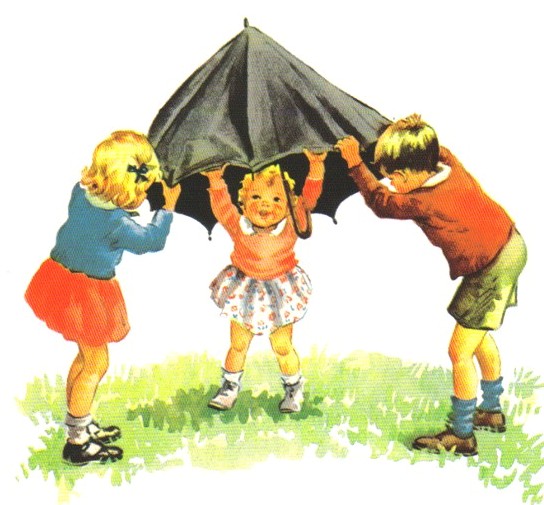
Raised on the Dick and Jane readers, I yearned for what I thought of as a "real Dick and Jane Family." By the time I got married, at 22, I was desperate. I wanted a suburban house furnished with a husband, three kids, a dog and a cat. I wanted to get into what I thought of as the World of Sunshine, the 1950s sitcom world, where Young Families went on picnics, had family meals, and went to church. I wanted to be a soccer mom.

I got it, and loved every minute of it. During summer vacation, when I would drive my kids around in my van and people thought I was a real soccer mom--a housewife--I was tremendously proud: I had made it, I felt, into the Dick and Jane world.

Everyone I knew thought I was nuts. If there was one thing they wanted to avoid, or at least postpone, it was the suburban family life that I was desperate to get. Most people I knew never got married, and most who got married never had children. They wanted to live in Manhattan or San Francisco, work in publishing, journalism or the arts, live in lofts, go to concerts and to the theater, try out restaurants and engage in various urban entertainments. They regarded life in the 'burbs as boring, declasse and certainly not the thing for people like us.

I could easily understand the resentment of red-state, church-going Nascar Dads and Soccer Moms. They recognized that there was an urban coastal elite who thought the Dick and Jane life they chose to live was ridiculous and were contemptuous of them. And they believed that the progressive policies this elite promoted, including gay marriage, would make it difficult to get or maintain the Dick and Jane life, and squeeze them out. So, in California, they voted for Prop 8, which was represented not as anti-gay but as pro-family.

Most had nothing against gays and opposed anti-sodomy laws as invasions of privacy; most supported civil unions. They simply wanted affirmation that the Dick and Jane sitcom life was the good life, that it was the norm, and that it wouldn't be taken away from them. And churches supported Prop 8 de jure because they regarded homosexuality as a sin but de facto because Dick and Jane families were their bread and butter.

Thursday, November 06, 2008

A New Deal

Op-Ed Columnist - The Obama Agenda - NYTimes.com

Can Barack Obama really usher in a new era of progressive policies? Yes, he can. Right now, many commentators are urging Mr. Obama to think small. Some make the case on political grounds: America, they say, is still a conservative country, and voters will punish Democrats if they move to the left. Others say that the financial and economic crisis leaves no room for action on, say, health care reform. Let’s hope that Mr. Obama has the good sense to ignore this advice...[A] serious progressive agenda — call it a new New Deal — isn’t just economically possible, it’s exactly what the economy needs. The bottom line, then, is that Barack Obama shouldn’t listen to the people trying to scare him into being a do-nothing president. He has the political mandate; he has good economics on his side. You might say that the only thing he has to fear is fear itself.

Truth is, I don't like Obama one bit. I didn't watch his speech on Tuesday because it would have undermined my elation at the Democratic win. What matters to me is the progressive economic agenda that I hope he'll pursue.

Working class conservatives distrust the progressive agenda because they believe it will make them worse off--by slapping them with taxes that drive them to near-destitution and taking away the minimal freedom they enjoy. Liberal pundits and other purveyors of 5-minute ideas repeat the conventional wisdom that the dispute between liberals and conservatives cashes out as a difference between those who regard equality of paramount importance and those who would trade off equality for freedom.

This is false. The whole agenda of progressivism is to increase freedom. Apart from the privileged few, people have their backs to the wall with little room to maneuver. There are few options to better oneself and hard work doesn't pay off. That isn't the way it looks on paper, but it's the way it is on the ground.

I was talking to a (semi-)mature student who'd gotten in on a scholarship after kicking around in the World and taking courses at a local community college. She had the clarity and decency to recognize that she got this chance in part by luck. She knew someone who was working at a $10/hour job and couldn't get out. She defaulted on a student loan and so couldn't go back to school unless she made good on that, but couldn't raise the $400.00 she needed to do that. Long ago, when Bill Clinton abolished "welfare as we have known it" I had another student who was getting through on a patchwork of loans, grants and novennas. She had a baby and was on welfare. But with the end of welfare as we have known it, in her senior year, she got the ultimatum: quit school and get a job or there would be no more benefits of any kind.

These aren't just anecdotal tear-jerkers. The absence of safety-nets makes it too costly to assume risk. Without public services and financial support it's difficult or impossible to get further education or training. The issue is not equality but freedom--the assurance that no one will be trapped like this, that anyone who is willing to work hard can better himself, can avoid getting stuck for life in boring, dead-end work. I got that chance by pure dumb luck, and a ran with it. So, I believe, would most people--it's just that without social safety nets and government intervention most people don't have that chance.

Tuesday, November 04, 2008


We won!

We won! We won! All of us won!

At last this 40 year nightmare is over. McCain is making his concession speach. McCain mentions Obama and his audience is boo-ing but McCain hushes them. honorable and a good sport. But making a big deal about the fact the Obama is black. I don't care for that.

I suppose I can understand myself though because today I got my country back.

But to me what's most important is the defeat of a poisonous ideology that's caused untold suffering. Keep the red flag flying!!!

Monday, November 03, 2008


The Great Reductio

Sidney Blumenthal: McCain is on the verge of a defeat that marks the end of the Republican era | Comment is free | The Guardian

Now, certain factors that have dominated US politics for 40 years seem destined to recede to the far corners. In economics, supply-side panaceas and deregulation created the worst crisis since the Great Depression, requiring a conservative Republican administration to part-nationalise banks, something unimaginable under any Democratic administration. In foreign policy, neoconservatism led to the morass in Iraq and Afghanistan while undermining the western alliance. In social policy, the evangelical right battered science, the separation of church and state, and the right to privacy. Finally, the conservative principle of limited government has become a watchword for incompetence, cronyism, corruption, hypocrisy, and contempt for the rule of law.

Pray, brethren, that in 24 hours this nightmare will be over.

Americans put their faith in what Bush senior in an unguarded moment called Voodoo Economics. The Market would work--in the short run before we were all dead. We would go deeper and deeper into debt but grow our way out. We even managed to persuade policy-makers in other countries to follow our lead--at least gingerly. And now we've pulled down the world economy. Reductio.

But it wasn't simply recondite economics that that drove us, and the world, into this pit. It was the American Dream--the vision of the Good Life as one of endless drudgery and unlimited consumption. When a woman at a Republican rally prior to Election 2004 complained that she was working at 3 jobs, Dubya didn't even get it. His response was, "Good for you!" That's the American way: spend all your waking hours during the week working and your weekend shopping until you drop. After that drudgery you're brain-dead and don't have the ability to enjoy anything but buying more and more and more crap.

Of course some people still don't recognize a reductio when they see one. So McCain is still chanting the mantra of "Wealth creation, not wealth redistribution." Pump more money in at the top and it will, eventually, trickle down. When? Cut taxes on businesses and they'll create more jobs--so that more people can spend more of their time in mind-numbing drudgery, and buy more and more stuff to create more rotten service sector jobs where more people can spend even more of their time doing miserable shit work.

Of course it hasn't worked. Unemployment is up, people are losing their houses and can't afford more stuff. But even if, per impossibile, it had this is surely a vision of hell--days of drudgery and constraint, buried alive until the magical moment on Saturday when you go to the mall for a brief ecstasy of consumption.

There was bit on the Animal Channel about a species of frog that spends most of its lifecycle buried alive. They hatch, swim around for a bit as tadpoles and then burrow into the mud where they stay for months until the rains come. Then they dig themselves out, copulate, and die, within the course of a day. That is exactly the American Dream--the work ethic. Spend most of your life buried alive, at work, and then, for a brief moment in the sun, eat, copulate and shop. Of course you don't die right away after that--you just burrow back into the mud for another week of work, buried alive. Arbeit macht frei: "Good for you!"

I suppose it's a vicious circle. Here were people locked into the Wheel--didn't the Buddha have something to say about this? But the only thing that got them out was that the Wheel stopped so that they couldn't consume any more--and some couldn't work any more. Seems like a more interventionist deity trumped the Buddha there.

Let us pray.

Saturday, November 01, 2008

People are Rational (But Misinformed)

A scary Halloween with Sarah Palin | Salon News

Supporters of the Republican candidate for president believe they are looking down the barrel of a gun loaded by Karl Marx, held by Barack Obama. The McCain-Palin fear-mongering tour is exposing -- or exploiting -- unrest and anxiety wherever it goes...84-year-old World War II veteran John H. Gay...was tormented by images of a fantastical Stalinoid world to come. According to Gay, Obama believes the communist "mantra" "from each according to his abilities, and to each according to his needs"; that "if we go the socialist way, you young people will lose all your freedoms -- mentally, physically and religiously." As he envisioned a possible future under Obama, he spoke of scarce hot water and hulking Soviet-era high-rises of the sort that ring Moscow. And he was not alone in his concern that if the Democrats win on Tuesday, it'll only be a matter or time before Americans are getting in bread lines. "I'm afraid of the slippery slope to socialism," said 51-year-old Mike Brecht, whose 21-year-old son is fighting in Mosul, Iraq, and was adopted from Russia when he was 7. Brecht claims that his son, who was 2 when the Berlin Wall fell, still remembers life behind the Iron Curtain. "He can tell you all about his one turnip a day that he ate," said Brecht of his son. "Everybody got the same turnip."

Hello? Is that so hard to understand? This has nothing to do with "values," racism, the Strict Father vs. the Nurturing Parent, or, as one article a while back put it, "cracking the working class code." People are rational. They don't want to live in poverty and misery.

When they've had a good enough look at the forthcoming "socialist" Obama administration, they'll change their politics. Why is this so hard to understand?

Wednesday, October 29, 2008


The Great American Nightmare

TAPPED Archive | The American Prospect:

Steven Calabresi waxes hysterical and ludicrously implausible: "If Mr. Obama wins we could possibly see any or all of the following: a federal constitutional right to welfare; a federal constitutional mandate of affirmative action wherever there are racial disparities, without regard to proof of discriminatory intent; a right for government-financed abortions through the third trimester of pregnancy; the abolition of capital punishment and the mass freeing of criminal defendants; ruinous shareholder suits against corporate officers and directors; and approval of huge punitive damage awards, like those imposed against tobacco companies, against many legitimate businesses such as those selling fattening food."

The kerfuffle over the New Yorker cover featuring Barak Obama in Muslim garb fist-bumping Michelle in an Angela Davis afro petered out long ago. Latte-swillers were afraid that Joe and the hockey moms would catch a glimpse of it at newsstands and take it seriously. They didn't.

I thought that this cover was a very good idea. There are all kinds of inchoate fears swirling around in people's heads that they never scrutinize and can't quite articulate. Bring them to light, display them clearly, and they're embarrassed: "Do I really believe that Michelle Obama is a terrorist packing an assault weapon? That Barak Obama will hang a picture of Osama Bin Laden over the mantle and burn the American flag? Jeez--I'm an ass."

What we need here is a new Handmaid's Tale displaying, with great clarity, the content of working class conservative's worst nightmares in the way that the original represented the nightmare vision of secular liberals.

Here it is. Legions of Welfare Queens taking advantage of their constitutionally guaranteed right to welfare living high on the hog. You can see it now: the greater part of urban areas turned into boiling slums where the idle poor spend their days sitting on the stoops drinking, playing craps in the streets and driving around in their Cadillacs at the taxpayers expense while near-destitute white people (yup, white) toil at two or three jobs to support them.

Affirmative action gone wild. Small business owners continually monitored, forced to hire representative numbers of blacks, Hispanics and Muslim terrorists. High tech firms employing illiterate black dudes with gold chains and ornamental gold teeth as software engineers to meet their quota, paying them to explore porno sites on the internet.

Government-financed abortions through the third semester: heavily pregnant Welfare Queens queuing up outside Planned Parenthood, where squalling babies are dumped in the trash out back. The mass freeing of criminal defendents: hoards of dangerous criminals pouring out of the prison gates to rape and pillage.

Corporate officers and directors harrassed continually with frivelous lawsuits. Zorba's Greek Buffet of Chula Vista slapped with a multimillion punitive damages suit for moussaka.

That's it, i'n'it? But show them what they believe and they might have second thoughts. Display it Hieronymous Bosch style--the obese Welfare Queens dipping into buckets of Colonel Sanders as they drive around in their Cadillacs and homocidal psychopaths pouring out of prisons to sack American cities as Grand Ayatolla Obama in his turban and Michelle in her afro cheer them on. Reducio.

But maybe I'm wrong. Most people I know took The Handmaid's Tale seriously. They're convinced that there are hoards of Fundamentalists who enjoy vast political power, who could very well take over and would, if they did, establish exactly the sort of regime it portrayed. And I know quite a few people who believe that all Christians are secretly on board with this agenda or are, at the very least, "enablers."

I detest the working class, but I do think they're smarter than this.

Saturday, October 18, 2008


Politics and Modality

Is Anybody Happy? - Op-Ed - NYTimes.com

Joe the Plumber! Joe is, of course, the conservative guy from northwestern Ohio who told Obama: “Your new tax plan is going to tax me more” because he planned to buy a business that he hoped would reel in more than $250,000 a year in profits. The proper answer, as Obama should have known, was: “No, it won’t.”...Joe the Plumber, it turns out, is actually named Samuel and is not a licensed plumber. He has a lien on his house for unpaid taxes. While his professional life is still a little hazy, there is not much evidence he’s ever going to become a small business owner. And he would be a beneficiary of the Barack Obama tax plan.

So why is Joe/Sam not a rational self-interested chooser?

It depends on what you mean by "self." Sam, a grunt who works for a local handyman outfit, is interested in the well-being of a possible self, Joe the Plumber--his counterpart at another possible world. Lost in logical space, he imagines that he is Joe, a hard working plumber at that possible world, who is about to buy a business that will bring in $250,000 a year. So Sam supports actual world policies that will benefit Joe who is, in a latitudinarian sense, a "self."

This is no more or less rational than Diana-Worship. During Princess Di's brief, inconsequential life millions of fat, working class housewives adored her. It is hard to understand way they didn't resent her. Here was a woman who had everything anyone could possibly want, including immense wealth and the prospect of being Queen of England but was still whining. But instead, lost in logical space, they empathized with her vapors and her silly romantic notions. They had princess-counterparts at other possible worlds and a "self"-interested concern for their well-being.

Maybe that's one of the differences between economic liberals and conservatives. Conservatives are modal optimists. They imagine themselves at possible worlds where they are better off, where their counterparts are rich plumbers or even richer princesses and, out of modal "self"-interest, support policies that would benefit their privileged counterparts even at their own expense. Liberals, like me, are modal pessimists. We obsess over the plight of our unlucky counterparts and promote policies that would benefit them--usually at our own expense.

I never did like Princess Di or have any lively sense of what my taller, slimmer, richer counterparts are up to at their respective possible worlds. But I have a very vivid sense of my unlucky counterparts' lives and constantly spin out their stories in great detail.

I have never gone through a check-out line without imagining what it would be like to be a supermarket checker, trapped in a 2 x 2 space for 8 hours a day, doing endless, boring, repetitive tasks, with no product to show, no possibility of achievement and no way out. When I order stuff on the phone, I imagine being a "customer service representative" locked into a cubicle in a room full of women in cubicles taking phone orders, thinking about ways out. I could go to beauty school at night or take a course to be a medical records clerk, but how much better would that be? Besides, after a day at this job I'm knackered. I go home and cook, clean up, and then all I'm good for is vegging out in front of the TV. I can also easily imagine myself as a data entry operator, trapped in a cubicle inputting meaningless figures. I'm under constant supervision and every keystroke is monitored. There's no way out. The only other jobs I could get are equally bad.

I imagine myself a working class housewife pushed out of the house by my husband, Joe the plumber. "Get your fat ass down to Walmart and get a job, bitch." What can I do? If I leave this jerk I'll be working at Walmart anyway and be poor to boot. I once had options, when I was too young to appreciate them, but I don't any more. I could have gotten better grades in high school, gone to college and got a more interesting job. But I didn't. So now I'm stuck in a life of soul-sucking, mind-killing drudgery and there's no way out--at least not in this possible world: I can still read romance novels, follow the lives of the rich and famous on TV and imagine being Princess Di.

Whose fantasies are more rational? Harsanyi pumps our intuitious about fairness by asking us to imagine ourselves living everyone's life in turn. This is, now that I think of it, a restricted possible worlds fantasy and one that poses some metaphysical difficulties. We are to imagine a range of possible worlds, one for each member of the current population, which are qualitatively exactly similar to the actual world but where we ourselves are different people. Alternatively, we are to imagine ourselves as modal super-persons, transworld merelogical sums of persons at these possible worlds, and ask how the world should be in qualitative terms to make the modal super-person of which we are world-bound parts better off.

This pumps liberal intuitions very effectively because there are ever so many more miserable lives than good ones.

We could imagine it using that the clock metaphor pop science shows use to help us understand geological time: "At 11:30 pm the dinosaurs emerge; at 5 seconds to midnight we have the Industrial Revolution." Imagine: for 12 hours you are an illiterate peasant farmer working to eat and eating to work; for another hour or so you're a member of a hunting and gathering tribe, trudging endlessly through the jungle looking for edible berries and hoping for a large mammal kill so that you can get a little protein and take a rest; for another 3 or 4 hours you're a beggar, prostitute or hustler in an urban slum; for most of the time left you're scanning groceries, inputting data, flipping burgers or working in a call center; for half a minute you're successively a college professor, a lawyer, a dentist and a plumber with a $250,000 a year business; for a nanosecond you're a movie star, a professional athlete, a best-selling author and Princess Di.

For perhaps 5 or 6 hours you're sick and in pain. For most of the day you're physically exhausted. For all but two or three minutes you're engaged in mind-killing drudgery--trapped, constrained, in an agony of boredom.

Harsanyi got it right: this is the version of the Golden Rule that bites. The problem with political conservatives and other Romantics is not a lack of sympathy but a lack of imagination.

Friday, October 17, 2008

Plastic Obama

Op-Ed Columnist - Thinking About Obama - NYTimes.com

We’ve been watching Barack Obama for two years now, and in all that time there hasn’t been a moment in which he has publicly lost his self-control. This has been a period of tumult, combat, exhaustion and crisis. And yet there hasn’t been a moment when he has displayed rage, resentment, fear, anxiety, bitterness, tears, ecstasy, self-pity or impulsiveness...There has never been a moment when, at least in public, he seems gripped by inner turmoil. It’s not willpower or self-discipline he shows as much as an organized unconscious. Through some deep, bottom-up process, he has developed strategies for equanimity, and now he’s become a homeostasis machine...Obama, the sojourner, seems to go through various situations without being overly touched by them.

What a thoroughly unpleasant human being--if he is a human being. My mini-theory is that Obama is a hologram projected by MoveOn.org. After extensive marketing research, the Democratic party has re-branded itself with the logos, color schemes and candidate that Americans will buy.

Even apart from his remarks in camera to big bucks supporters about blue-collar voters "clinging to guns and religion" it isn't hard to see why he's been branded as an "elitist." He instantiates the quintessence of posh, along with the MacMansions to which Americans aspire, the shopping malls which are our agoras and the groomed, uniformed flight attendants ushering us from one immaculate airport to another. This is what we want: a flight-attendant-in-chief, immaculately groomed, without quirks, eccentricities or passions, without aggression or fight, who effortlessly floats to the top without striving.

Wednesday, October 15, 2008

Joe the Plumber and the American Dream

Plumber From Ohio Is Thrust Into Spotlight - NYTimes.com

Mr. McCain...[cited] “Joe the Plumber” [Wurzelbacher] as a symbol of how Mr. Obama’s tax policies would hurt small businesses. Since his initial exchange with Mr. Obama, Mr. Wurzelbacher has become a favorite of anti-Obama bloggers and television commentators. On Neil Cavuto’s program on Fox News, for example, he was asked if Mr. Obama’s response about “spreading the wealth around” satisfied him, and gave an explanation that the McCain campaign was quick to send around to reporters. “His answer actually scared me even more,” Mr. Wurzelbacher said. “He said he wants to distribute wealth. And I mean, I’m not trying to make statements here, but, I mean, that’s kind of a socialist viewpoint. You know, I work for that. You know, it’s my discretion who I want to give my money to; it’s not for the government decide that I make a little too much and so I need to share it with other people. That’s not the American Dream.”

I'm working right now on a paper for a conference on the American Dream so these issues are much on my mind. American Dreamers assume that the Market is perfectly efficient and so, given that people respond to incentives, will produce the greatest desire-satisfaction for the greatest number. The Fundamental Theorem of the American Dream is that there are trade-offs between equality and opportunity, security and freedom.

It is easy to see how opportunity preludes equality. Some people are just going to be more productive than others because of their native ability and propensity for hard work. If you smack them down with redistributive tax schemes in the interests of promoting equality, they'll have no incentive to produce and we'll all be worse off because there will be less stuff to go around. It is also easy to see why security and freedom are incompatible. People need the stick as well as the carrot. Where there are social safety nets in place, potentially productive individuals won't be driven to extend themselves out of fear and will, as a consequence, be less productive.

The Theorem however is false, which shows that there's either something wrong with derivation or the axioms from which it was derived. The US trails affluent, industrialized nations in both equality and social mobility: American men are less likely to find themselves in different economic segments of the population from their fathers in the US than in social democratic, egalitarian Denmark. As for the fear factor, insecurity discourages risk-taking. Americans, contrary to all expectations, turn out to be more risk-averse than Chinese who, relying on economic safety nets provided by kin and by the state, can afford to extend themselves.

After 15 years of hard work Joe the Plumber was in the process of buying a plumbing business, which he anticipated--rightly or wrongly--would net him more than $250,000 a year. An unseen presence throughout the debate, McCain invoked him in an appeal to the nation of shopkeepers Americans imagined themselves to be. But in fact there are are relatively few small business owners in the US and, of those, very few net $250,000 or more:

According to figures compiled by the Small Business Administration, there are fewer than six million small businesses that actually have payrolls. The rest are so-called nonemployer firms that report income from hobbies or freelance work done by their registered owners, earning as little as $1,000 a year. Of these, according to a calculation by the independent, non-partisan Tax Policy Center, fewer than 700,000 taxpayers would have to pay higher taxes under Mr. Obama’s plan. But even some of these are not small-business owners in the traditional sense; they include lawyers, accountants and investors in real estate, all of them with incomes that put them in the top tax brackets.

The American Dream Joe described is out of reach for most Americans, and may not even be feasible for Joe. The odds are stacked against small business owners and even if his business doesn't fail in the first year, as most small businesses do, it is unlikely that he'll make $250,000 a year out of it.

Most people can't even make a start on Joe's American Dream. I could never even dream of starting a plumbing business because I couldn't be a plumber. I'm a woman: women can't get apprenticeships in plumbing or other blue collar trades. That's just the way it is. Back when I was a kid even being male wasn't enough to open the magic door to plumbing: you had to be Italian. And even then, it wasn't easy if your grandparents came from the wrong part of Italy.

There are a thousand assumptions, customs, practices, informal procedures and unwritten rules that restrict people's options in virtue of sex, race, ethnic origin, family connections or lack thereof, economic status and circumstance. School and scouting are fair meritocracies: if you're smart, hard-working, ambitious and persistent you get your grades, credentials and merit badges. But adult life in the Real World, particularly in the part of it working class Americans inhabit, is nothing like that.

Most grown-ups know that the official rules are a sham. Everyone knows that women have to work harder than men to prove themselves and that there are some jobs women just can't get--as well as jobs men just can't get. Everyone knows that it's not what you know but who you know. Everyone knows that open bidding is usually nothing but window-dressing: construction projects go to relatives and croneys. Everyone knows that hard work, initiative and persistence rarely pay off. A few very lucky people have jobs where achievement and advancement are feasible. Most work at routine jobs where there is simply no way to to show their stuff: you clock in, do what your told or look busy if there's nothing to do, and clock out.

It isn't big government or high taxes that impose constraints, but the customs, practices and unwritten rules operating under the radar that restrict our freedom, limit our options and undermine initiative. Government is the liberator. By legislating and enforcing official rules to achieve fair meritocracy, the state imposes relatively minor restrictions on the few but opens wider opportunities for the many and expands overall freedom.