Sunday, September 13, 2009


The Church of the Divine Slacker

The Church of the Slacker God | Machines Like Us

[W]e should really think of 'accommodationists' as 'worshippers in The Church of the Slacker God.' But this raises the question of why intellectuals like Wright and Baber so desperately want to belong to such a church, which frankly does not seem to offer much to its parishioners. After all, it rules out answers to prayers, miracles, heaven, and all the other goodies that entice believers to join the more mainstream churches, even though those goodies never actually materialize. How much mileage can you get out of the mere contemplation of 'ultimate beauty, power, and glory', as Baber suggests...Why do religious intellectuals like Baber and Wright feel the need to find reasons to believe in the existence of such a slacker god?...Why is it that even the Slacker God is so appealing to people like Wright and Baber? Perhaps they think that even though this entity has never done anything apart from creating the universe and its laws right at the beginning, it has the potential to do something, and they find that thought somehow comforting.

The New Atheists are an irritating lot for at least 3 reasons:

(1) First, while there is nothing to say about atheism, the New Atheists just keep talking...and blogging, and commenting, and writing books, and talking and talking and talking.

There's nothing to say about atheism for the same reason that there's nothing to say about non-stamp-collecting: it's simply the denial of a thesis and non-participation in a practice. There is plenty to say about stamp collecting, none of which interests me, and even more to say about religious belief and practice: one can discuss theology, church history, liturgy, ecclesiastical politics, and so on ad nauseum. But there's nothing of interest to say about atheism: all one can say is that atheists don't believe the theological claims and don't engage in religious practice, which is pretty obvious and thoroughly uninteresting.

Consequently, the only thing atheists qua atheists have to talk about is why they aren't theists: why theological claims are implausible and why the practice of religion is silly, superstitious, pointless or positively dangerous. But we've heard it all. Hume said it, and said it well. Russell said it and popularizers like Mencken and Sinclair Lewis packaged it for mass consumption. The New Atheist project of saying it over and over again seems distinctly pointless--and thoroughly boring.

I'm not suggesting that the New Atheists' criticism of religious belief and practice is impolite or strident or disparaging of religion, which ought to be respected. I'm fine with rudeness and stridency, in which I often engage myself, and see no reason why religion should be respected. I just don't see why atheists should engage in the critique of religious belief and practice--any more than non-stamp collectors should spend their time and energy going on about how boring and pointless stamp collecting is. Certainly, when religious belief is under consideration, in philosophy of religion classes or public debates, that critique needs to be considered--and represented in it's most powerful and compelling form. I just don't see any reason why, apart from this, atheists should endlessly rehearse anti-theistic arguments, or affiliate with atheist organizations or send their kids to atheist summer camps any more than non-stamp-collectors should make a fuss about the folly of stamp collecting, or join non-stamp-collector organizations or send their kids to non-stamp-collector camps.

(2) New Atheist bloggers and commentators are, for the most part (though not universally) just bloody awful.

Not everybody of course. There are interesting blogs and intelligent commentators. But enter this arena and in most cases it is impossible to get anywhere because of the defensiveness and clubbiness, informal fallacies and meta-talk. Enter into a discussion with a comment about the New Atheists and immediately you will be challenged for calling them "the New Atheists"--there is apparently a back story, which I don't know, and the phrase is taken to be derogatory. Before cutting to the chase you have to explain that you don't mean "New Atheists" in any derogatory sense and explain what you do mean. By the time the discussion of nomenclature is finished you are too tired and frustrated to go on and have forgotten the original point.

The defensiveness and hostility are incomprehensible. I've known a few people who were brought up in oppressive, conservative religious homes--chiefly embittered ex-Catholics--who are still angry, resentful, hostile to religion, and defensive. I get it. And I can see how secular people living in strongly religious, social conservative cultures might be equally hostile and defensive. But very few people now are in these circumstances.

I eavesdrop on the discussions and hear people who have not had the old time religion banged into them as kids and who live in subcultures where secularism is the norm expressing or, as I believe, feigning the same defensiveness and hostility. I don't get it. One way or the other though, it is frustrating and, I'm beginning to believe, pointless to engage in discussion.

I got into one of these frustrating discussions on one blog at which a commentator referred to the virtual space of the discussion as "our atheist living room." OK, I get it: there are lots of ostensibly public spaces devoted to discussion and debate on the internet that are in fact semi-private clubs. I've blundered into these places quite often, entered into the discussion, and eventually finally given up (or been kicked out) when I realized that the purpose was "community" and mutual support rather than discussion or debate. As far as I can see most New Atheist blogs are de facto atheist living rooms and there are simply few venues for serious discussion.

(3) New Atheists don't get religion, don't get that they don't get religion, and are unwilling to entertain the possibility that there is anything to get.

How much mileage can you get out of the mere contemplation of 'ultimate beauty, power, and glory', as Baber suggests

This is like asking how much mileage you can get out of great sex. How could the Greeks and Trojans have fought that epic war over Helen? Or like asking how much mileage you can get out of love of country or the desire to create a better, fairer society or relieve suffering or achieve fame and fortune or make significant advances in the sciences or save the ecosystem or any of the other things which various people regard as of ultimate importance. I myself don't get the importance of great sex, love of country, the desire to create a better society or relieve suffering, the desire for achievement or a whole host of other goals that others regard as important. But I get that they regard these things as important, and I'm even curious what it would feel like to regard these things as important. I don't think that they can't possibly really have these interests and goals, or believe that when they say they have these aims they must be disingenuous or self-deceiving and really be after something else.

Most atheists, new and old, and most religious believers don't get that there is something to get about the desire for religious experience and seem to think that the motive for religious belief and practice must really be something else.

Why is it that even the Slacker God is so appealing to people like Wright and Baber? Perhaps they think that even though this entity has never done anything apart from creating the universe and its laws right at the beginning, it has the potential to do something, and they find that thought somehow comforting.

I can only speak for myself, but I have no interest in the potential of God to "do something" or in some sort of "comfort." I'm perfectly capable of taking care of myself, believe that science explains all there is to explain about how the material world works and that technology is all we need to solve all our practical problems. I am not looking for "comfort."

For me, aesthetics is the whole enchilada and religious experience is the limit of aesthetic experience. The very phrase, "mere contemplation of 'ultimate beauty, power, and glory'" is bizarre: what could be more important or less "mere"? This is like saying "mere fame," "mere money," "mere achievement" or "mere orgasm." Give us some credit. I can't empathize in my gut with people who want to "make a difference" to the world or help people. I just haven't got that in me. But there are clearly lots of people who do. We have lots of kids at my place who enter the "Teach for America" program: they want to "make a difference" and to help. This is opaque to me, but I can recognize that impulse, applaud it, and see that it isn't "really" something else even though it's not something that I myself can feel.

My "ultimate concern" is ecstasy--that slam-bang aesthetic experience in this world and the next: as I understand it, the vision of God. And I'm fascinated by the stuff of religion, not only because it provides the props that facilitate religious/aesthetic experience but because I find it fascinating in and of itself. I just plain like religion for its own sake. Most people don't understand my taste for religion any more than I understand the urge to collect stamps. I do however recognize that some people really like to collect stamps and that their interest in stamp collecting isn't "really" an interest in something else. I dearly wish that others would recognize that my interest in religion and the interest of others who share my tastes, is not "really" something else.

Religion is a minority taste. There's no more reason why most people should be interested in religion than there is reason for people to be interested in stamp collecting. Of course I'd like it personally if more people were interested in religion so that I would be in a comfortable majority rather than a beleagured minority and, more importantly, so that there would be more resources to maintain the religious infrastructure--the church buildings and services--I need to crank up religious experience. But if there is one thing I do NOT believe is that the slacker God in which I do believe cares whether we believe in him or not.

Saturday, September 12, 2009


Eighteen Again

Op-Ed Columnist - Parsing Mr. Wilson’s Apology - NYTimes.com

Joe Wilson, who will be forever known as the “You lie!” congressman, unless he does something even weirder in the future, has a lot of fans this weekend at the Taxpayer March on Washington. This is an anti-Obama demonstration organized by FreedomWorks, the group that helped bring us the summer town hall meeting protests. Those were, of course, the events where we learned that we did not actually have a national consensus on the inadvisability of bringing loaded weapons to places where the president is speaking...Among the co-sponsors of the march are the Tea Party Patriots, who helped bring us those anti-tax rallies last spring...The one thing that unites them seems to be a sense of inchoate rage. Although mentioning it makes them really, really mad.

It's all familiar--Revolution For The Hell Of It. That's what we were up to in 1968, marching in Chicago to disrupt the Democratic National Convention. Some people had serious political agendas but most of us were there to have fun, and to vent that inchoate rage.

I didn't see the pig, but I just read about it in Nixonland, a sentimental journey back to the days of Revolution. I was just a foot soldier lost in the crowd and didn't see much, but apparently our leaders, after yelling insults at the Chicago cops hoping to provoke a reaction released a greased pig in Lincoln park which the cops had to capture.

I'm not even sure why I was there. Partly I think I was there to participate in a world historic event--to have been there--and partly to protest against a variety of social inequities and features of the culture I didn't like. We all had our particular betes noir. For me it was dress codes and grooming requirements. I was always irritated when people assumed that I dressed like a slob because I had some radical political agenda or flaky philosophy of life. I wasn't a slob because I was a hippie: I was a hippy because I was a slob.

For others it was educational and occupational expectations. We were the first generation of kids for whom college was mandatory so colleges were full of students who had no academic interests or career goals, couldn't or wouldn't do the work, and had no reason to be there. They were mad at the system that was forcing them through the meat grinder, through college and to respectable middle class jobs in which they had no interest. For all of us of course there was the war in Vietnam--the great symbol of everything we didn't like.

Now it's payback time. Those working stiffs who drudged away while we had fun doing revolution, the Chicago cops we insulted and provoked, those working class Joes who watched us rich brats enjoying opportunities they never got, frolicking in the streets, graduating, getting the good jobs, getting rich and hijacking the whole culture are getting theirs back. Now they're doing tea parties, town hall meetings and revolution for the hell of it.

Wednesday, September 09, 2009


Taming Religion

Tony Blair's justification of faith | Andrew Brown | Comment is free | guardian.co.uk:

"Faith is not going to disappear", he said: 'We have this view in Europe that once peope get a bit more sensible, a bit more rational, faith will go out of the window. That's not the way the world works.'..the one thing he did not say or claim, even by implication, was that faith was harmless. It seemed to me that he thinks of it as thoroughly dangerous – which of course it is – but that is what makes it so necessary to tame, and such an interesting challenge for any politician. "If people can't find a way of taking their religious faith into co-existence with others, we're in for a really dangerous time."

When I was an undergraduate my fantasy was the Middle Ages, in particular, what I thought of as "Chaucer's Merry England." Here was a world, at least as Chaucer represented it, where there was pageantry and color, sex, drunkenness and jollity, and lots of religion--which no one took very seriously.

This of course is what the Society for Creative Anachronism calls "the Middle Ages as they should have been" and most certainly were not. But it provides an agenda for taming religion.

What should religion be? That depends on what you think religion is. Nowadays people seem to have high-falutin' notions of what it is that are quite detached from what most religious folk historically would have imagined. They claim it has to do with the Big Questions. According to one of my colleagues who does Freud, religion is a "palliative" in the face of our recognition that the universe is without purpose and that our lives are "meaningless."

I'm not sure in what sense our lives could have "meaning" or what their being "meaningless" comes to but I agree that the universe is without purpose. I'm just not bothered by it, and don't see why anyone should be bothered. I don't see the problem.

Most people as far as I can see aren't bothered by it either and in any case historically most have not thought of these non-issues as the stuff of religion. For the folk, including me, religion is cultic practice and belief in the supernatural. That's the core. In addition religion promotes moral decency--honesty, kindness, diligence and a sort of generic uprightness.

That seems pretty tame to me. To be a religious person is to believe in the supernatural--to believe that there is a God, or gods, or something or other beyond the material world, which may or may not intervene in human affairs but generally does not interfere--and to engage in various religious ceremonies, traditions and practices. What's the problem?

In the US for decades advocates of separation of church and state have fought to keep religion out of the public square--to get prayer out of the public schools, Christmas creches out of public parks, and hilltop crosses off of public land. The New Atheists have joined the crusade. The idea I suppose is that these innocuous symbols and practices are a gateway to the harder stuff: oppressive puritanism, theocracy and superstition, inquisitions and crusades.

It is an empirical question whether suppressing the innocuous trappings of religiousity would make the world a better place. The Beatles, imagining there was no Heaven, seem to have thought so but I rather doubt it. People enjoy religiousity and believe that it promotes moral decency. When crusading secularists work to take it away, they get their backs up--as well they should.

Religious folk have their backs to the wall. In the US the religious white working class is a shrinking minority. They're scared and angry because they believe that their way of life is under attack and that chaos is breaking in. What would satisfy them? Do they really want nothing less than the whole religious right agenda--including "creationism" in the public schools, the suppression of gays and the institution of a whole range of puritanical constraints?

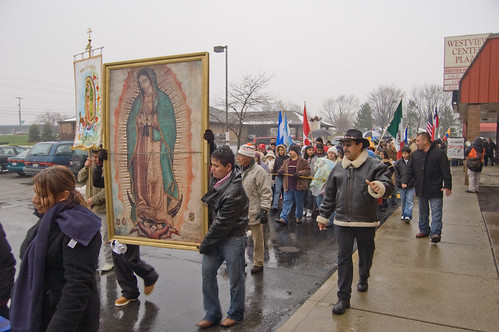
I really doubt it. I think they would be quite happy with displays public religion--creches in the park, ten commandments in front of courthouses, prayer in schools and invocations by clergy at public ceremonies--and the promotion of generic moral decency along the lines of the Girl Scout code. And there is nothing wrong with that. I'd like it myself--along with processions in the streets and other high church fun.

So that seems to me the way to tame religion. Maximize innocuous religiousity.

It's an empirical question whether this would work but it's worth trying. As a thought experiment at least, imagine that there were processions in the streets and prayer in the public schools, that high school athletes huddled in the field to invoke Jesus' support for their team and in time of drought there were public prayers for rain. Imagine that religiousity was pervasive, that the events of the liturgical year were publicly celebrated with public Christmas festivities, passion plays, and other ceremonies in due season.

If we had all that stuff, would anyone care about gay marriage, evolution, stem-cell research or any of these symbolic issues? Call me naive or call me cynical: I doubt it.

Monday, August 31, 2009


On Alpha

Nicky Gumbel interview transcript | Adam Rutherford | Comment is free | guardian.co.uk

We've got something that works in practice, and we're trying to work out how we can make it work in theory. So, why is it? I think there are a number of things about it. I think it's a low key, relaxed, unthreatening, non-confrontational way for people to explore pretty big questions. I think a lot of people do have questions about life, 'What's the purpose of my life?', 'What's the meaning of my life?', 'Why am I here?' … It's hard to find a place where you can discuss those issues. You can't go down to the pub and say, 'What do you think the meaning of life is?' It's hard at a football match to discuss those kinds of issues. But actually, most people have those questions, somewhere in the back of their minds. And if you can find a place where you can discuss it with a group of people who, like you, are outside of the Church, and it's a non-threatening, relaxed environment, quite a lot of people want to do that.

Alpha looks awfully like the Nondenominational Evalgelical-Lite packaged for an upscale clientele that's become the industry standard in the US: "low key, relaxed, unthreatening, non-confrontational way for people to explore pretty big questions." Think Rick Warren, Obama's paradigmatic representative of the People of Faith special interest group. We speak in tongues, but not in a scary, crazy way--and we don't handle snakes. We don't approve of homosexual activity but we love everybody regardless of sexual orientation.

There's clearly a market for this style of religiousity, which churches recognize. Alpha was promoted in my area as a church-growth tool. The market hasn't been saturated yet because evangelical-lite churches are growing in the US, though not as fast as the fastest growing "religious group": the unchurched.

I still wonder how big a market there is for this kind of religion overall--when the mega-churches will max out. What we've seen in the US has been (1) realignment, (2) consolidation and (3) "hollowing out." (1) Traditional denominational divisions came to be perceived as unimportant as (2) affinity groups--liberal, conservative, evangelical, charismatic, etc. consolidated across denominational lines. Religious Right organizations drew conservatives from various denominations, consolidated and, for a time, exercised political muscle; charismatics in traditionally pentecostal churches aligned with charismatics in the Catholic Church and other denominations; "non-denominational" churches grew.

Then (3) the "hollowing out": liberals dropped out to join the unchurched, gutting traditional "mainline" denominations, including the Episcopal Church. Others were drawn into more conservative evangelical outfits, including non-denominational churches and evangelical para-church organizations. As the evangelical movement grew it became more polished, more culturally mainstream and more "unthreatening and non-confrontational" picking up some of the folkways and cultural preoccupations of the upper middle class. See those good-looking, 20-somethings in the picture? Clearly not gun-totin' snake-handling rednecks from the boonies. I'm sure they re-cycle their trash.

So now you have the hollowing out, the bimodal distribution on the religious continuum: the unchurched in one growing bump; evangelicals at the other end in a growing bump (though not growing as fast as the unchurched); and traditionally liberal mainline denominations in the sinking valley between between the bumps dying out.

This hardly suggests that "God is back." It suggest realignment and consolidation: the total number of religious believers is going down and those who are left are consolidating in the evangelical-lite orbit. So you see growth in Alpha, Rick Warren's Saddleback Church, etc. In the end, leaving aside ethnic religious groups and peripheral cults, we'll have just two options: pure secularism and evangelical-lite Christianity which will become our culture-religion--if it hasn't done so already. Very depressing.

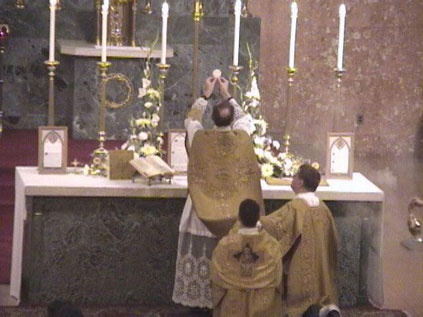
It's depressing to me not only, or primarily, because the total number of religious believers is going down but because with that consolidation the religious options are disappearing. I have no interest in the evangelical style--whether lite or heavy. What a miserable bore. But I've finally had to admit to myself that, at least in our current cultural context, this is the kind of religion most people enjoy--this slick, boring, platitudinous crap. I just can't fathom why. Admittedly, de gustibus: I can't fathom why people watch soap operas or sports. What I find most puzzling is that this kind of religiousity is billed as "experiential" because that's exactly what I find it not to be. I've been to revivals and even went to a couple of pentecostal services where people were speaking in tongues and to me it was just incredibly boring--not in the least experiential for me. Now high mass in Latin at St. Marks when I went to Venice, with choirs in separate balconies singing in stereo under 42,000 square feet of mosaics: that was experiential.

I've been reading Robert Taft Through Their Own Eyes: Liturgy as the Byzantines Saw It. This is what I was always after in religion: over-the-top, all-the-stops-pulled-out high church and unabashed mysticism--splashy, flashy liturgy and metaphysical thrills, church as acid trip. I thought that this was what everybody wanted--but that the moralizing, killjoy clergy who threw away the old Prayer Book didn't want us have it because it was too tasty and yummy: no banana splits with whipped cream, nuts and a cherry on top; eat your broccoli--it's good for you. No Elizabethan English or fancy stuff: shake your neighbor's hand and smile; follow the words on the screen and make nice noises about "justice, freedom and peace." The Church is People. We do community-building and goody-goody projects, rummage sales, youth groups and Activities.

The shocker for me, when I actually got involved in the church (as opposed to going to church, blurring out the people and fantasizing Byzantium, Hellenistic mystery religions and Mediterranean Folk Catholicism) was that people actually liked the hand-shaking and rummage sales, and all the dull, platitudinous, moralistic crap. And didn't seem to want the over-the-top mystical/liturgical acid trip. I still can't fathom how anyone could not want that.

The hardest thing for me now, having left the Church over 10 years ago, is accepting that they just don't, that the Church does not have anything for me because it can't--because my taste, my interests and my spin on religion is anomalous. This is really the death of a dream. I still can't believe it: how could anyone in their right mind, anyone who isn't completely dead of soul, prefer those sanitized mannequins in the picture having a pleasant chat about the Meaning of Life to the outdoor-indoor liturgical extravaganzas Taft describes, the processions, the public grand opera, the crowds in the streets milling about, jostling, fighting, flirting and stampeding to the altar for communion?

Thursday, August 27, 2009


Oh Jesus, I've Seen the Light!!!

Years ago I read about an experiment in which people blind from birth were taught to draw objects with which they were familiar by touch in perspective. After some training, one after the other, they would suddenly "see," understand how visual perspective worked and, I think, become able to visualize objects. And they were thrilled.

And do I ever get it! I've been slogging through a heavy math book all summer at an average rate of 4 hours per page. (I'm not very good at math and I never got beyond 2 years in high school). I diligently worked through every example and every proof--mercifully the proofs are short and the logic I know.

I opened that book today and looked at a couple of the theorems I worked through yesterday to prepare to push on to the next section. And today I saw what they meant, could draw the pictures, could see how they showed what all the set theoretical symbol-pushing was about. I saw, in particular, how the closure of A is the intersection of all closed sets containing it. It's embarrassing because it's so blindingly obvious and I'd missed it because I was so nervous about the whole thing, because I was continually paging back to re-read definitions. And because it takes me a while: I'm one of the mathematically blind. Then I saw the theorem that the closure of A in a subspace Y of X is the intersection of the closure of A in X and Y, again after I'd worked through the proof, paging back to definitions and other theorems, still not feeling I'd got it even though it was a short proof. It's incredible, though embarrassing that I didn't see it before.

This is so good that I don't think I want to push further today--in a way not press my luck. I just want to hold onto this and record it so that I can come back to it. It seems so trivial when put into words, like some platitudinous description of a religious experience--the sound of one hand clapping after years of diligent meditation. And so obvious. But this is the kind of thing that knocks your socks off and makes life worthwhile. I'll probably become embarrassed about this post and zap it in a few hours, but right now I just want to shout!

Monday, August 24, 2009


Dividing the Question

Science and religion need a truce | Chris Mooney and Sheril Kirshenbaum | Comment is free | guardian.co.uk:

[A]ccommodationists – still dominate the hallowed institutions of American science. Personally, these scientists may be atheists, agnostics or believers. Whatever their views on the relationship between science and religion, politically, spiritually and practically they see no need to fight over it.

It is controversial whether religious belief is compatible with good science and, in particular, with commitment to Darwin's theory of evolution.

It is also controversial how best to promote scientific literacy and support good science. Given that fundamentalist Christianity undermines scientific literacy in virtue of its rejection of evolution we could argue the way to promote scientific literacy is to discredit fundamentalist Christianity and, just to be on the safe side, take down non-fundamentalist Christianity and religion generally as well since "moderate" religious believers who, even if they don't reject evolution outright, will claim God "guides" evolution--which is a rejection of the core insight of the theory. On the other hand, given that many people are religious believers and of those only a minority are intransigent fundamentalists the best way to sell good science might be to persuade people that evolution is not (uncontroversially) incompatible with religious belief.

So there are two independent questions, which are invariably muddled, in discussions of "accomodationism":

(1) Is the theory of evolution compatible with religious belief?

(2) What is the best way to sell the theory of evolution (to promote scientific literacy, and to support good science)?

(1) is a philosophical question and, like all philosophical questions, is disputed. It is, in any case, the business of philosophers of science.

(2) is a strategic political question and, like all questions of this nature, asks for cost, benefit, risk assessment. It is an empirical question which strategy will be most effective in selling the public on evolution and promoting scientific literacy: the New Atheist strategy or the Accommodationist strategy. This question is the business of social scientists, pollsters and science teachers in the trenches.

How are the two questions related? Well, if you answer yes to (1), if you believe that the theory of evolution (and good science generally) is compatible with religious belief then you should clearly be an Accommodationist. If however you answer no to (1) it is an open question whether you should adopt the Accommodationist strategy or not, and the answer will depend on empirical considerations concerning the costs, benefits and risks of Accommodationism.

Suppose you answer no to (1): you believe that religious belief is incompatible with good science and with the theory of evolution in particular. Adopting the Accommodationist strategy does not commit you to lying about your answer to question (1) or to promoting the idea that religious belief and science are compatible. You are committed at most to noting, if asked, that (1) is a disputed question. All you have to do is tell the unvarnished truth: "Some people, like me, believe that science and religion are incompatible. Others, including some scientists and philosophers of science, believe that science and religion are compatible. Like all philosophical claims it's controversial: there are smart, reflective, informed people on both sides."

Moreover, unless you are asked, you don't have to speak to this question at all. If you want to write a book defending and popularizing evolution, write about evolution. You may have a variety of views about other related issues. You may believe that the National Science Foundation should get more funding or that scientists should be allowed to teach in public high schools without special teaching credentials or that all the sciences are reducible to physics in accordance with the Unity of Sciences program or that they are not reducible to physics or that science and religion are incompatible. That's fine, but you can editorialize elsewhere. The most effective way to teach people about evolution and get them interested is to write about evolution in the clearest and most lively way you can and avoid distracting readers by promoting other agendas.

This is not dishonest. It is not fudging or going into the closet on atheism or even simply being "nice." It is a matter of keeping on topic. Given the bully pulpit it's always tempting to expound your views on everything from the state of the economy to the virtues of your new iPhone. But there is no reason why you should.

I sometimes wonder what the priorities of some "New Atheists" are. Is the aim really to defend good science by attacking bad religion? Or do they in fact view the defense of evolution as a golden opportunity to promote atheism?

I don't have objection to the promotion of atheism in the media, on the sides of busses or anywhere in the public square. Atheists complain that they've been silenced while religious believers have carte blanche to preach to the multitudes. If that's true it is indeed unfair and I think it would be just fine if atheists shouted as loudly and got just as much media exposure as religious believers. Of course once the novelty has worn off most of us won't pay any more attention to atheist busses than we do to the billboards that pop up every Christmas announcing that Jesus is the reason for the Season. Ho-ho-ho...hum.

What I find objectionable is the use of science education as a vehicle for promoting atheism. It would be equally objectionable if Christians used music education to promote religious belief or if ideologues with axes to grind used courses in the social sciences to promote their political agendas, whether left, right or center.

It's disgraceful that over 40% of Americans don't buy the theory of evolution, which is not in any way seriously controversial but is an established fact. It is shocking that even more are convinced of the efficacy of quack medicines, believe reports of psychic phenomena and extra terrestrial visitations, spend their money on pseudo-scientific self-help books and bogus therapies, and give credence to all manner of fashionable nonsense. Scientific literacy and beyond that plain respect for rationality is important.

Now maybe new atheists will argue that in the long run the most effective way to promote scientific literacy and critical thinking is to discredit religious belief. If so, I'd like to see arguments backed by empirical evidence from history and the social sciences. I haven't seen any compelling arguments yet and from what I have seen it seems more likely that attempts to attach an anti-religious agenda to science undermines attempts to promote scientific literacy. In general, ceteris paribus, the most effective way to defend a thesis is by showing that it is cheap--that it is not burdened with many entailments or further commitments and does not have hidden costs. I can't think of any better way to sell evolution than to make the case that it is cheap--that it does not entail the rejection of religious belief.

Saturday, August 22, 2009

Verificationism & The God of the Philosophers

How did you lose, or find, your faith? | The question | Comment is free | guardian.co.uk

All the objects of human reason or enquiry may naturally be divided into two kinds, to wit, Relations of Ideas, and Matters of fact. Of the first kind are the sciences of Geometry, Algebra and Arithmetic...[which are] discoverable by the mere operation of thought ... Matters of fact, which are the second object of human reason, are not ascertained in the same manner; nor is our evidence of their truth, however great, of a like nature with the foregoing...If we take in our hand any volume; of divinity or school metaphysics, for instance; let us ask, Does it contain any abstract reasoning concerning quantity or number? No. Does it contain any experimental reasoning concerning matter of fact and existence? No. Commit it then to the flames: for it can contain nothing but sophistry and illusion.

I've been reading through the articles and comments at the Guardian CIF Belief section addressing the question of the week: "How did you lose, or find, your faith?

Losers are running about 100 to 1 over finders and their comments are both surprising and illuminating. In almost every case the losers complain that religious belief either fails to deliver the practical benefits they were lead to expect or that it commits believers to implausible factual claims and moral principles.

I never expected religion to provide any practical benefits, so I have never been disappointed. And, like most educated Christians, I do not believe most of the empirical claims associated with Christianity. I do not believe that the universe came into being just a few thousand years ago. I do not believe that humans or other animals were created their current form or even that God had some hand in "guiding" evolution. I do not believe that the Bible provides an accurate account of Middle Eastern history, or that any of the miracles it reports actually occurred, or that the wisdom literature it includes is a suitable guide to life. I do not believe that the existence of God makes any difference to the way the world operates or that religious belief should make any difference to the way we live.

As a religious believer my boogie is verificationism. The verificationist asks: if the existence of God makes no empirical difference, if religious claims aren't verified in experience and can't be falsified, then what, if anything, do they mean? Back in Logical Positivist days when verificationism was an article of faith, John Wisdom put this question to religious believers in his Parable of the Gardener:

Once upon a time two explorers came upon a clearing in the jungle. In the clearing were growing many flowers and many weeds. One explorer says, "some gardener must tend this plot." The other disagrees, "There is no gardener." So they pitch their tents and set a watch. No gardener is ever seen. "But perhaps he is an invisible gardener." So they, set up a barbed-wire fence. They electrify it. They patrol with bloodhounds...But no shrieks ever suggest that some intruder has received a shock. No movements of the wire ever betray an invisible climber. The bloodhounds never give cry. Yet still the Believer is not convinced...At last the Sceptic despairs, "But what remains of your original assertion? Just how does what you call an invisible, intangible, eternally elusive gardener differ from an imaginary gardener or even from no gardener at all?."*

Religious believers, Wisdom suggests, face a dilemma: if their religious views commit them to empirical claims about the organization of the cosmos or the origins of species, the history of the Middle East, the occurrence of miracles or the efficacy of petitionary prayer, then they are false; if their religious convictions have no empirical import then they are literally meaningless. What is the difference between an invisible, intangible, hidden God who makes no difference to the way the world works and no God at all?

If Wisdom is right, then the question of whether there is reason to believe that such a God exists cannot even arise. Religious claims are not even false: they are literally meaningless, so the question is unintelligible.

Logical Positivism is out of favor in the philosophical world these days and in any case it seems clear that religious claims are meaningful. Theists, like myself, claim that there is a conscious being, who is omnipotent and omniscient, who is not a part of the natural world and not to be identified with the cosmos in toto, but is incorporeal and transcendent. There may not be any compelling reason to believe that such a being exists, but the question of whether such a being exists is intelligible--or at least as intelligible as the question of whether humans other than ourselves or other animals are conscious.

In the case of humans and other animals overt behavior is evidence for consciousness, though we can be fooled. Paralyzed humans, locked into virtually inanimate bodies, may be conscious and the complex behavior of some animals, which suggests intelligence, is mechanical and hardwired in. It is controversial whether whether it is possible that there be "philosophical zombies," individuals who are exact physical duplicates of ourselves down to the structure and activity of their brains, but are not conscious. The Folk, whose intuitions have not been corrupted, generally believe that philosophical zombies are possible and that there is a difference between conscious beings and duplicates who are not conscious, even if that is a difference which others could not even in principle detect.

If they're right then there is a difference on the grand scale between zombie worlds and worlds which are like them materially but include an immaterial, transcendent, conscious being. It is a further question whether ours is a zombie world or a theistic world and whether there is any reason to believe that it is one way rather than the other. But the question is intelligible.

Still, even if it is not meaningless to claim that there exists a God who makes no difference to the way in which the natural world works one may ask: what is the point of believing in such a God? Why would anyone even want to believe in a God who makes no difference: a God who does not answer prayers, give our lives "meaning," or imbue the universe with purpose, reveal moral truths, strengthen us to fight the good fight or, in some sense, ground values.

I can only speak for myself, though my answer is hardly original. God is an object of contemplation. It is remarkably hard to discover by introspection what one really thinks about these matters because they are so overlain by conventional pieties. I suppose what I believe is that God is the ultimate aesthetic object, ultimate beauty, glory and power, and that the vision of God embodies the quintessence of every aesthetic experience and every sensual pleasure. Religion is an escape from the world--not because the world is bad but because it isn't good enough. Pleasures are fleeting and no matter how intense any aesthetic experience is, it could always be more intense. The vision of God is the asymptote they approach.

That's what's in it for me.

It's hard for me to understand why most people aren't after this. For any good thing, who doesn't want more? Still, religion isn't everybody's cup of tea and I don't see why it should be. If there's one thing that I do not believe it's that God cares whether we believe in him or not.

*Proceedings of the Aristotelian Society, 1944-5, reprinted as Chap. X of Antony Flew, ed., Essays in Logic and Language, First Series (Blackwell, 1951), and in Wisdom's own Philosophy and Psychoanalysis (Blackwell, 1953).

Thursday, August 13, 2009

Not the National Health

Thousands Line Up for Promise of Free Health Care - NYTimes.com:

Ana Maria Garcia, who works for Orange County, has health insurance that covers her husband and 3 ½-year-old daughter, but her dental deductibles are too high for them all to get care, she said...“Regardless if you are employed or not,” Ms. Garcia said, “everything in California is expensive, and so I can empathize with everyone here. Looking at this crowd, I think this is what people fear health care is going to be with reform. But to me it also shows the need."

Ms. Garcia nailed it. This is what Americans fear about "socialized medicine" and "socialized" anything else: a radical leveling down that will leave them much worse off.

The roots go deep into our national psyche. We believe that every normal person can and should take care of himself and his family, working hard, buying goods and services in the free market and for larger projects--barn-raisings and quilting bees--collaborating with neighbors on a voluntary basis. After all, if everyone did this, everyone would be ok and there would be no need for government and taxes--except of course to pay for cops, prisons and the military to protect us from Outsiders within and without: foreign powers intent on taking away our freedom, terrorists, and the criminal underclass. The government patrols the periphery and does not intrude; inside, we take care of ourselves.

Of course the poor will always be with us, and there will always be people who can't or won't take care of themselves. For those people there is private charity and, if necessarily, state run services which are public charities. We aren't heartless, after all. We don't want people dying in the streets or going without the basic necessities for minimal survival. But charity is only for the truly desperate and should only deliver the most basic services--only what is necessary to prevent death or great suffering.

As taxpayers we are stakeholders in the public charity system. We want to make sure that it screens charity cases so that only the truly desperate get benefits and doesn't use our hard-earned money to provide them with anything beyond the bare necessities. They don't deserve any more and we can't afford any more. If we have to pay any more in taxes then we will be forced to become charity cases ourselves, relying on public schools, public clinics and public transportation--government charities that provide bare-bones services for the underclass.

Socialism is a system which, in the interests of achieving equality, levels down, taxing citizens into destitution and forcing them to depend on the government for public charity. Comes the Revolution, impoverished by taxation, brainwashed by state propaganda and deprived of our firearms, we won't be able to fight back. We'll be enslaved by the government and forced to depend on it's largess for the kind of bare-bones services it now provides for the poor. Instead of making appointments and seeing doctors in offices we'll be queuing up for hours, or days, to get treated in sports stadiums like Ms. Garcia. Instead of driving to work, we'll packed into public transportation with smelly bums, spending hours on the bus for commutes that take 15 minutes by car. And our children will go to government run schools, like the ones we now maintain for the underclass, where drugs and violence are rife and kids are lucky if they manage to achieve basic literacy.

That is what, I believe, Americans on the right think and they deserve to be taken seriously. They aren't stupid, irrational or bigoted. They look around and see a two-tier system where the market provides decent services for the middle class--insurance and private health care, private schools and the like--and the government provides bare-bones services for those who can't afford to pay. So they infer, reasonably but mistakenly, that if the government "takes over" health care or other services they now buy in the market, that they will getting the inferior products that it now provides for the poor. The very phrase, "welfare state," conjures up for them a vision of everyone "on welfare," living in ghetto poverty. They, quite reasonably, don't want that for themselves.

How do you persuade them that this is just mistaken? You could point to other affluent countries that maintain welfare states which provide decent public services, including health care. But they won't believe it. Most don't realize that Western European countries are welfare states. They were brought up to see the world divided between the Communist Bloc and the "Free World": they think of Capitalism as the opposite of Communism and imagine that European countries maintain the same faux-laissez faire system as the US. Those who know that European countries provide much more by way of public services and social safety nets than the US are convinced that European welfare states are unsustainable and, in any case, that such systems wouldn't work in the US because, unlike Europe, we have a large, unproductive, criminal underclass.

How do you respond to this? They've got most of the facts right. What they've got wrong are the counterfactuals. Public services are lousy but that's not because government by its nature is inefficient or incapable of delivering anything better. It's precisely because they operate as public charities, providing bare-bones services for the poor. Middle class people don't use them and so won't support them, so that's all they can be.

As for this NYTimes article, describing how hordes of the uninsured and underinsured queued up for hours and slept in their cars waiting to see doctors and dentists volunteering their services in a sports stadium, I suspect many would have quite a different take from me, or from Ms. Garcia who sees this affair as showing a need. Most Americans will see it as a solution not a problem. They will see this arrangement as the way things should be: regular people with insurance making appointments to see private doctors and dentists in regular offices; those who can't afford it going to sports stadiums and charity clinics where doctors and dentists provide pro bono services.

If there's a "need," they think, what's needed is generousity: we need more doctors, dentists and other professionals volunteering, more churches providing social services, more charities. If everyone were generous we wouldn't need government (except for foreign and domestic defense): we would take care of ourselves and our families by our own efforts, and for the Other there would be charity clinics, soup kitchens and food pantries generously funded by us and staffed by volunteers.

Progressives need to address this. But first they need to get it, and that doesn't seem to be happening. The current system is lousy. It's not only humiliating to the recipients of these charities--it's unnecessarily risky for everyone and grossly inefficient. Private charity, individuals giving handouts to beggars ad hoc, evolved into organized charity which was both more humane and more efficient. Organized charity evolved into insurance schemes and ultimately into the welfare state, a public insurance scheme that was much more humane and efficient and made everyone better off.

Sunday, July 26, 2009


Anglican Schism, Ho-Hum

The Anglican church's crumbling foundations | Stephen Bates | Comment is free | guardian.co.uk:

If the Americans are shown the door the consequences for worldwide Anglicanism are incalculable and not just because the wealthy US church largely pays for and sustains the communion, including in those parts of the world where the church's mission would not otherwise survive. In the Church of England there are many who find they have more in common with their American brethren than with the strident, coercive voices they hear from the conservatives.

So the Anglican Communion as an institution is over. So what? Why did we ever need it in the first place? I can still go to any Anglican church in the world and feel perfectly comfortable going for Communion. So can anyone else, if they have the nerve, whether Anglican or not--no one is checking. What difference does it make if there's an Anglican Communion with an institutional struction and bishops that fly around the world to have confabs with one another?

I thought the whole point of having a "Communion" was that anyone who was a member of a church in the Communion could take Communion in any church within the Communion. It was like having one's money in a bank that had lots of branches around the world with ATMs where one could do banking business. Suppose Bank of America fragments so that my local branch is no longer part of the same firm as all these other branches around the world but I can still use their ATMs without paying additional fees. Why should I care? The institutional structure makes no difference to me so long as I can conduct my banking business conveniently wherever I go. The Anglican Communion makes no difference to members if they can still go to Communion in any Anglican church, whether in or out of the Anglican Communion. What else is there?

I suppose there's the money--and lots of it. For churches outside of the US being in the Anglican Communion has been like Having Contacts: it provides access to the money and power of the Episcopal Church. When the schism becomes official, will the Episcopal Church keep sending money to poor Anglican Churches in the Global South? And if it does, will they accept it? Hell I care. If the Episcopal Church stops sending money or other churches stop accepting it, then the Episcopal Church will just plow it back into endowment or use it to litigate over church property in the US and to maintain empty churches. Why should I care? I contribute to Oxfam. There are plenty of secular charities sending money to the Global South and no particular reason to have that money channeled through the Episcopal Church.

So I am still puzzled. What is the point of the Anglican Communion? It isn't needed as a vehicle for income transfers from the US to the Global South. It certainly doesn't exist to maintain doctrinal uniformity--that's the last thing I or most other Anglicans want. It doesn't issue Communion tickets because anyone can go to Communion in any Anglican church no questions asked and no ticket needed. So what on earth was it ever for? And what bad consequences will there be if it splinters into two or two hundred fragments?

Wednesday, July 22, 2009


The New Atheists

The philosopher's God | HE Baber | Comment is free | guardian.co.uk

I wrote this piece for The Guardian, which got the predictable comments there and then enjoyed something of an afterlife on Butterflies and Wheels with more predictable comments.

I suppose I can understand some of the hostility to religion. There are still a few people around who were raised as fundamentalists and got beat up by it or who live in backwaters where conservative evangelical Christianity is the religion du jour, religious participation is de facto mandatory and non-participants get flak. And there are many more who don't have much contact with religion of any kind but who have picked up the rhetoric of these embittered ex-fundamentalists because it's an intellectual status symbol or because it's bad and therefore cool. Ho-hum.

What I don't understand is the virtually universal tone-deafness to religion--the utter failure to understand its appeal. But maybe I just have an anomalous understanding of what religion is.

Religion as I understand it is metaphysics + cult.

Metaphysics isn't empirical. The metaphysical commitments of religion don't have anything to do with the way in which material world operates. Science tells the whole story about that. They are solely concerned with out-of-this-world matters: the existence and nature of God and the possibility of postmortem survival. The metaphysics of religion commit one to belief in the supernatural, to out-of-this-world states of affairs--not to any claims about the supernatural influencing the natural order or breaking into it by way of miracles.

Cult consists in liturgy and, by extension, the infrastructure that houses it and facilitates it: church buildings, religious art, silverware and costume. It includes also all literature, music and art that has religious themes.

That's it in its essence. For historical reasons all sorts of other stuff has been tacked on, much of which has been, over the centuries sloughed off. Religions once provided cosmologies: now we know better and have abandoned creation myths for scientific accounts of the origin of the universe. Religions, Abrahamic religions in particular, told an historical story: we now know better, read the Bible critically and recognize that most of the history it includes is at best fanciful.

Most religious believers still seem to imagine that religion provides ethical guidance. It's time to dump that too: ethics is a purely secular discipline. As far as the Big Questions about the Meaning of Life and such, these aren't even intelligible. Faux-religions that dispense with the metaphysics but insist that they have something to offer when it comes to ethics and questions about Meaning or The Human Condition are completely worthless. Secular ethics, a philosophical specialty, deals with ethics and the empirical social sciences tell us everything there is to know about the "human condition."

So what is left is metaphysics and cult. That's religion in its essence. So what's the problem with that? Interesting metaphysics, that doesn't in any way undermine a completely scientific understanding of the natural world, ceremonies, customs and wonderful art and, if we're lucky, religious experience.

Sunday, July 19, 2009


The Big Tent Collapses

More briefly, on the quasi-collapse of the Episcopal Church, I ask why people leave the Episcopal Church for more conservative groups--not only or primarily break-away "continuing Anglican" outfits, but non-Anglican evangelical churches, the RC Church and Orthodox churches?

The explanation one always hears is that these people are social conservatives who object to the liberal policies of the Episcopal Church and other mainline churches. But is this really true for all, or even for the majority? Could it possibly be that what they're after is religion--a commitment by the church to belief in the supernatural, a program to get members in touch with it, and moral support for religious belief in a world where it's increasingly socially unacceptable?

I'd bet that for lots the conservative moral and social agenda to which these churches are committed is a don't-care for many people. These churches unabashedly offer religion and lots of people are prepared to get on board with the conservative agendas as a concommitant--or at least sign on and ignore them. I might too, but I just cannot accept the conservative agenda as a don't-care. I might if I were male because the nub for me is the commitment to understanding gender as theologically or metaphysically relevant. I can't no way no how buy that and, when I've contemplated trying in order to affiliate with a church that was religiously congenial it slams me as a reducio of religious belief: if Christianity, real Christianity with real theistic metaphysics, entails that men and women are in some deep metaphysical sense different, then I cannot buy Christianity.

Conservatives are on the whole patronizing jerks about this. They respond by saying either (1) that I don't understand that difference doesn't mean inequality or that (2) if I'm not willing to accept the "hard sayings" which invariably concern sex and gender, I'm not sincerely religious--I'm just interested in, as one formerly Episcopalian Orthodox priest put it, haberdashery. But that's untrue--about me and about others who cannot buy into their program.

(1) It isn't inequality to which I object but la difference as such--the idea that men and women are in some deep way different or ought to play different roles, even if those roles were genuinely equal. (2) It isn't that the "hard sayings" are hard in the sense that they would prevent me from living the life I want to life or doing the things I want to do. They are just plain unbelievable and, when I've tried out the mental gymnastics it would take to generate belief in these hard sayings it invariably strikes me that believing the fundamental religious claims takes mental gymnastics and may be equally implausible. Reducio.

There may be virtue in doing things that are hard to do, that take self-sacrifice, but there's no virtue in believing things that are hard to believe. What is peculiarly offensive about religious conservatives is the assumption that believing seven impossible things before breakfast is virtuous and that anyone who balks at that is just an aesthete playing games, dabbling in liturgy, without any serious religious commitment.

Saturday, July 18, 2009


Pared-Down Episcopal Church Is Looking to Grow Through ‘Inclusivity’ - NYTimes.com

Whether Episcopalians really can regenerate a church based on youth and “inclusivity” remains to be seen. So far, they have paid a price for their actions. Four bishops, the majority of their dioceses and numerous parishes around the country jumped ship in the last few years to form a new, theologically conservative entity called the Anglican Church in North America. That group will not consecrate women, not to mention gay men and lesbians, as bishops. It has about 100,000 members, while the Episcopal Church has about two million. But a church study shows that membership declined about 6 percent from 2003 to 2007. The Episcopal Church also saw its contributions decline...To theological conservatives, these are signs of a church that will ultimately collapse because it has sold its soul to secular political causes.

Well, I'm glad that I left over 10 years ago, because if I hadn't I'd be heartbroken.

Of course the Episcopal Church will survive my lifetime, getting older, grayer and smaller--as I get older, grayer and, worst of all, smaller. But it is not going to "grow through inclusivity." Do these priests really believe that the Church will regenerate and then some by picking up a larger gay clientele and attracting "young people" because of its new, cool image? I wouldn't put it past them. Back when I was a kid they thought they could attract me by doing folk masses and adopting the idiom of the youth culture as interpreted and expurgated by middle-aged clerics.

And, of course, the conservative Anglican lot will do even worse. In Episcopal Church dioceses they'll meet in school cafeterias until they get sick of it and join some more established coventicle of holy rollers. In break-away "Anglican" dioceses they'll effectively kill off the local Episcopal Church and then become just another evangelical Protestant denomination or quasi-denomination.

What were they thinking? The outcome was predictable: anyone could have seen it coming. This campaign for gay rights in the Episcopal Church didn't benefit gays who were perfectly capable of taking care of themselves and didn't need to be adopted as yet another victim group or social justice project. And it undermined the Church. It didn't make anyone better off and it made some people worse off. How could any agent, individual or corporate, knowingly set out to achieve such an end?

The only answer is that they were blinded by by their own arrogance. These priests, overpaid do-gooders working for an organization that represented 1% of the American public, imagined that they had a prophetic voice to which the great unwashed would listen. They imagined that they had the standing to be heard and the resources to make a difference, like rich old ladies assuming that they could get their way--imagining that because they had a small clientele of retainers and sycophants the whole world was listening to them, when they were nothing but laughable nobodies.

Express any reservations about the Episcopal Church's program and you get tarred as a conservative because the whole controversy was represented by the Church, and in the media to the extent that they paid attention, as a battle in Culture Wars between liberals and conservatives. So any critique was hopeless--especially vexing to me as a liberal. I don't think there as anything whatsoever wrong with homosexual activity. I don't, for that matter, think there is anything wrong with any consensual sexual activity, whether it's part of a "committed relationship" or not. Sex is a trivial entertainment.

But the priests who were promoting this agenda just couldn't or wouldn't distinguish between the question of whether homosexual activity was ok and the question of whether the Episcopal Church should launch a campaign to persuade people that it was. Maybe this was a manifestation of residual adolescent cynicism: if people object to the Church's agenda it's just a cover--they're really homophobic reactionaries and puritans who object to the goal of "inclusion."

So now, even if I wanted to go back, where would I go? I certainly have no sympathy whatsoever with the conservative agenda of these break-away groups. None allow women bishops and most won't even have women priests. Their ethical commitments, including their views on sexuality, are diametrically opposed to my own. But there is less room in the Episcopal Church for me because as a consequence of this fight the Church has become an ideologically based organization focused on promoting political agendas and engaging in social action. The miserable irony is that I support these political agendas and am largely in agreement with the social vision. I just don't think that this is what the Church is for--and I don't think that it can pursue these goals effectively. Politics and social action are the business of secular organizations--and I contribute and belong to lots of those.

Church is for religion, because it isn't in a position to do anything else effectively and no other organization can do religion at all. The Episcopal Church is going down the tubes because it's clergy don't think religion is important or interesting. I sat through endless discussions "facilitated" by church growth gurus during the Decade of Evangelism which articulated a "vision" for the Church which assumed that religion wasn't important and that, in any case, people weren't interested in it. To attract members "congregations" (another buzz word) need to offer an array of essentially secular programs and activities--schools and pre-schools, coffee-klatch groups for stay-at-home moms, barbecuing consortia for guys, youth groups for high school kids, do-good projects and volunteer work, softball games and golf tournaments, adult education on various topics, crafts groups, exercise groups and every sort of community activity. Then they would come because those where the things that interested people--not religion.

But they didn't come, because secular organizations provided all this cheaper and better. Now that religious affiliation is de facto as well as de jure optional people are not going to bother with the Church unless they're interested in religion.

So now where are people who are interested in religion supposed to go, now that the Episcopal Church has gone further down the road to being a private, upscale community center? I saw where the Church was going years ago on a trip to Alaska to give a lecture and visit a theologian friend. She took me to the local Episcopal Church which had been colonized by academics and area yuppies--the tiny minority who were not yet resolutely secular. It was, I recall, an A-frame ski lodge affair in polished beech with a large hand-crafted patch quilt hanging from a balcony. The service consisted of selections of Good Music performed by the virtuoso organist, who taught at the university music department, and announcements of the various activities in which the congregation was engaged, including AIDS ministry, recycling and various social action projects. The liturgy was squeezed into the cracks of the corporate self-congratulation ceremony and there was, of course, the inevitable home-crafted bread baked by some organic housewife in birkenstocks.

But what are the alternatives? None for me because the split in the Church--not merely in the Anglican Church between Episcopalians and break-away groups, but between the old mainline and evangelicals across the board--mirrors the Culture Wars split in the larger society between secular liberals and religious conservatives. The difference is that within the larger society secular liberals are increasing while conservative evangelicals are declining, within the churches conservative evangelicals are taking increasing market share while the mainline is dying out. So the end toward this trend is heading will be the picture Obama's publicity crew has in mind when it tags yet another minority to be conciliated as "people of faith." The US, belatedly, will become a secular society on the European model, where most people are polite agnostics and where a small minority of polite conservatives, on the Rick Warren evangelical lite model, promotes family values.

Wednesday, July 15, 2009


Wise Latina

Sotomayor backs off ‘wise Latina’ quote - The Boston Globe

Supreme Court nominee Sonia Sotomayor, deflecting tough questioning by Republicans on the second day of her confirmation hearings, said yesterday that in 17 years as a judge she has never let her own life experiences or opinions influence her decisions. Sotomayor said her now-famous remark that she would hope a “wise Latina’’ would make better decisions because of her life experiences than a white male was a regrettable “rhetorical flourish that fell flat,’’ and does not reflect her views.

I once remarked that I didn't think that being a woman gave me any special perspective on teaching logic and that the philosophy department at my university would do just as good a job if it consisted entirely of white males.

I got slammed. This was something one wasn't supposed to say because, it was held, people of good will should promote the noble lie that members of disadvantaged groups, women and ethnic minorties, had something special to offer. As far as I understand there are two reasons for telling this lie: (1) it is supposed to be encouraging to members of disadvantaged groups and, more importantly, (2) it is supposed to persuade employers and others in positions of power to stop discriminating against women and minorities.

Since around 1970 women and minorities have been expected to make identity politics noises. So, Obama as a rising black politician was expected to do ethnic, join a black church and talk about black liberation. And Sotomayor was supposed to make noises about the special wisdom of Latinas. Neither of them, of course, believed it, and I doubt that their critics believe that they believed it: these are just the noises you're supposed to make to be a good mainstream liberal who happens to be a member of a minority group.

What a pity Sotomayor couldn't just tell the unvarnished truth. These are just the noises we minorities are supposed to make. We're supposed to take pride in our ethnic heritage--we certainly don't dare say that we feel no connection to it or consider it irrelevant. We're supposed to utter platitudes about the importance of diversity, about the special contributions (whatever they are) that members of different ethnic groups make.

Of course it's walking a tightrope because while making these noises we have to signal that we don't really mean it--that ethnicity is just a little hobby for us, as it is for the descendants of European immigrants. But everyone has always known what the game is so it's hardly dishonest--certainly not as dishonest as the behavior of Republican interrogators feigning shock at one conventional little feel-good remark about wise Latinas, pretending that they believe that I or anyone else ever took this bullshit seriously.

Friday, July 03, 2009

Bravo, Turkey!

Turkish gameshow Penitents Compete tests atheist resolve | World news | guardian.co.uk

It sounds like the beginning of a joke: what do you get when you put a Muslim imam, a Greek Orthodox priest, a rabbi, a Buddhist monk and 10 atheists in the same room?

Viewers of Turkish television will soon get the punchline when a new gameshow begins that offers a prize arguably greater than that offered by Who Wants to be a Millionaire?

Contestants will ponder whether to believe or not to believe when they pit their godless convictions against the possibilities of a new relationship with the almighty on Penitents Compete (Tovbekarlar Yarisiyor in Turkish), to be broadcast by the Kanal T station. Four spiritual guides from the different religions will seek to convert at least one of the 10 atheists in each programme to their faith.

Those persuaded will be rewarded with a pilgrimage to the spiritual home of their newly chosen creed – Mecca for Muslims, Jerusalem for Christians and Jews, and Tibet for Buddhists.


Thursday, June 18, 2009

For Colleges, Small Cutbacks Are Adding Up to Big Savings - NYTimes.com

For Colleges, Small Cutbacks Are Adding Up to Big Savings - NYTimes.com: "s for living on a budget.

Campus life is getting a bit dirtier as housekeeping standards are relaxed. Oberlin College in Ohio saved $22,300 by scaling back on window washing, and Pitzer College in Claremont, Calif., is power washing its sidewalks and windows once a year instead of twice. Carleton College in Northfield, Minn., is having office trash picked up weekly instead of daily, a change that eliminated three custodian jobs.

Please don't increase my course load! But I don't care if they never empty my wastebaskets. Puleeze! Put a trash barrel in the hall once a week and we'll just empty our own trash baskets. What I'm not sure I like is the elimination of those three custodian positions.

Sunday, June 14, 2009

Editorial - Neither Real Nor Free - NYTimes.com

Anti-Neocolonialism in Iran

Editorial - Neither Real Nor Free - NYTimes.com:

Although a runoff was widely expected between the two top vote-getters, the polls had barely closed before authorities declared victory for the hard-line president, Mahmoud Ahmadinejad. And it was a landslide: 62.6 percent versus just less than 34 percent for the main challenger, Mir Hussein Moussavi.

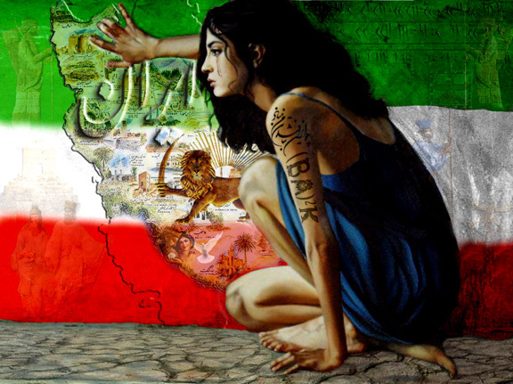
I followed this election pretty closely and this is a real bummer. And in the end, if Ahmadinejad got significant support it's our fault. US policies during the Bush years gave every tin pot dictator, theocrat and warlord from Teheran to Timbuktu free hand to play the anti-neocolonialist card. Everyone recognized that Bush's talk about freedom meant nothing more or less than US domination and that his crusade to liberate Iraq was intended to install a friendly puppet who would supply the US with cheap oil. It's hardly a surprise that most of the world doesn't distinguish between westernization and economic/political domination by the West, in particular by the US.

I'm really depressed that by all accounts the opposition movement is likely to fizzle. I pray that they have a civil war, their own civil war without US interference.

Saturday, June 13, 2009


Iranian Culture Wars

Landslide or Fraud? The Debate Online Over Iran’s Election Results - The Lede Blog - NYTimes.com:

A reader using the Web alias “Iranian Voter” reminds us that the repeated warnings from Iran’s intelligence service that opposition movements in favor of reform in Iran are nothing more than foreign government plots are believed by some Iranians:

"Color revolutions were masterminded by the West to turn former Soviet states into western satellite states, thus encircling Russia with hostile pro-Western states. Iran is of course the missing gap, the vulnerable underbelly of Russia. Yet, is that all you westerners conceive of us, your stooges? You have not learned the historical lessons then. A few days before the election the Moussavi camp turned green, made human chain, simulated 1978 street clashes, their puppet masters at CIA headquarters & MI6 in rapture. Soft green-colored coup turned to be a putsch and a grief to its organizers."

I do hope--and believe--that the US will have the good sense to stay out of this one.

Personally I've never understood why anyone cares one way or the other about being the "stooge" of a foreign power or some other alien group. But there are clearly a significant number of people who prefer to live in shit so long as it's their own shit.

It's hardly peculiar to Iran. We've been fighting this culture war in the US for over 30 years now: the war between the educated urban upper middle class and the lower classes--working class urban white ethnics and and rural rednecks. And we've finally won. Interestingly, Ahmadinejad had support for the same demographic that voted, against their material interests, for Republicans in the US for the past 30 years: the urban lower classes and the pious rural poor. The matter with Iran is the same thing that's the matter with Kansas: a large body of resentful peasants and proles who would rather sacrifice material well-being and live in their own shit than be "stooges" of the educated, urban-coastal upper middle class--the lawyers and liberal politicians, college professors and journalists or, in Iranian terms, "the West."

Marx got it right and wrong. He was right in recognizing that the one really significant international conflict was class war. He was however wrong in thinking that it was a war between the peasants and proles on the one side and the capitalists on the other and, even more importantly, that the peasants and proles were the good guys. It was a natural mistake because he couldn't have anticipated the significance of "knowledge workers" in the 20th century and beyond. He saw "intellectuals" as a small, peripheral minority, potentially allied with the proles and peasants. He certainly never imagined that the proles and peasants would ally themselves with the capitalists against a large and growing professional intelligensia. Adam Smith writing a couple of generations earlier didn't even know what to make of educated professionals like doctors and opera singers--upper middle class professionals just didn't fit into his system.

It's a pity that we who lived through the Revolution ignored what Marx got right but picked up what he got wrong. Out of a laudible intent to stick up for the underdog we gave the proles and peasants a free pass. They were religious bigots--excusable, just a feature of their culture. They were crude, tasteless and ignorant--a mark in their favor: they weren't hypocritical or pretentious. The men were brutal, sexist and beat women up--no problem: women's rights could wait. I say "we" however in the generic sense for which there is no equivalent in American English. I was furious about my fellow student radicals who admired the working class, valorized their "culture" and the cultures of non-western peoples. I knew what these people were like at first hand and loathed them.

But returning to the Iranian elections, I'm reminded of own stolen election in 2000. As a thought-experiment imagine that after all the dirty tricks and the selection of George W. Bush by a Supreme Court packed with his supporters, some foreign power like the EU had intervened. Personally I'd have been delighted, but I suspect most Americans, obsessed with notions of national pride and the avoidance of stoogery, wouldn't have liked it one bit. I would love to be a colony of the EU because all I've ever wanted politically is a social democratic welfare state and I don't care who runs it: I couldn't care less about sovreignty, independence or national pride and being a colony wouldn't bother me in the least.

But most people don't feel that way, either in the US or in Iran. So I hope, and optimistically, expect that the US will bud out. This is their culture war, not ours, even if it is part of the larger global culture war between the educated upper middle class and the masses.

And we will surely win that culture war--not we Americans but we the global educated upper middle class, allied with the liberal populations of affluent countries and educated elites throught the world against the proles and peasants in the US and abroad. When things get too bad for the masses, as they did when the US economy collapsed last fall, they will decide that they would rather throw in their lot with the lawyers, college professors, journalists and urban-coastal yuppies than sink in their own shit. That's how Obama got in. But even more interestingly and importantly, when things get better for the masses they, or at least their children, will become us.

Monday, June 01, 2009

Sotomayor's Pick-up Line

The 'Racist' Uproar Over Sotomayor's "Wise Latina" Comment

Whether born from experience or inherent physiological or cultural differences...our gender and national origins may and will make a difference in our judging. Justice [Sandra Day] O'Connor has often been cited as saying that a wise old man and wise old woman will reach the same conclusion in deciding cases. I am not so sure....that I agree with the statement. First, as Professor Martha Minnow has noted, there can never be a universal definition of wise. Second, I would hope that a wise Latina woman with the richness of her experiences would more often than not reach a better conclusion than a white male who hasn't lived that life.

Why did someone as smart as Sonia Sotomayor say such a dumb thing? Because until recently these were the dumb things you were supposed to say without thinking--conventional feel-good lines about the importance of diversity. They were throw-aways, like "How are you?" (please don't tell me)--political pick-up lines.

Back in the old days "What's your sign?" was a conventional conversation starter--polite social discourse in mixed company. You weren't expected to take astrology seriously, but you certainly weren't supposed to dispute it. It was part of the soothing background noise that filled otherwise embarrassing silences--cultural muzak. You expected it to be there, but you weren't supposed to listen to it much less criticize it as if it were real music.

By the latter part of the 20th century, identity politics was cultural muzak: padding for committee reports and the stuff of mission statements. No one took it seriously until Rev. Wright, during his 15 minutes of fame, announced that black and white children thought with different parts of their brains. Then Americans discovered they didn't like it one bit.

There was however a legal angle. The Bakke ruling made it illegal to use affirmative action as a remedy for societal discrimination. There were very good reasons for affirmative action, most particularly, as a mechanism for leveling the playing field where implicit bias and outright discrimination still put women and minorities at a disadvantage. To be safe though, and to stay within the constraints of the law, advocates of affirmative action policies had to pretend that the rationale was the promotion of "diversity." It was a Noble Lie.

In addition, the cultural myth that women and people of color had something special to contribute could be cited to make the case that it was in everyone's interest to desegregate schools, neighborhoods and places of employment. Women's gendered "management styles," employers were told, were good for business. Citizens were urged to recognize ethnic diversity as a social benefit, adding color, variety and cultural richness to their local schools and neighborhoods. Instead of appealing to altruistic motives, advocates of fairness pretended that desegregation was a matter of self-interest.

Noble Lies are eventually exposed. It always seemed to me that it would have been better to tell the truth in the first place. Women and members of ethnic minorities are disadvantaged by implicit bias, for which there is ample empirical evidence, and ongoing discrimination. Discimination in most cases is virtually impossible to prove, particularly since most is unintentional and innocent. As employers, educators and citizens we are not, for all our good will, gender- or color-blind. So for all practical purposes, gender- and color-conscious policies are currently the only feasible way to off-set the consequences of bias and, in the end, to achieve gender- and color-blindness.

But that's not the way politics, whether governmental or academic, works and why I'm no politician. Politicians have to play cultural muzak for the same reason that, in normal social settings, socially competent individuals have to make appropriate light conversation. "Hot enough for you?", "What's your sign?," "So, what do you think of the Padres this season?" I only learnt late in life that most people don't really want to do conversation most of the time, much less argue. For many, conversation is just background noise, an excuse for some other sort of non-intellectual personal contact (not necessarily sexual) that they enjoy.

Sotomayor was just making conversation and, in spite of conservative's attempts to inflate it, most Americans recognize that. Still, one hopes that given the lessons of the presidential campaign and Americans' professed repudiation of identity politics, we will stop making that particular kind of chit-chat.

Sunday, May 17, 2009


Obama at Notre Dame

At Notre Dame, Obama Defends His Abortion Stance - NYTimes.com

President Obama directly confronted America’s deep divide over abortion on Sunday as he appealed to partisans on both sides to find ways to respect one another’s basic decency and even work together to reduce the number of unwanted pregnancies. As anti-abortion leaders protested his appearance at the University of Notre Dame, the nation’s storied Catholic university, Mr. Obama defended his support for abortion rights but called for more “open hearts, open minds, fair-minded words” in the debate that has polarized the country for decades.

Well, Obama got it right on this one, though the persisting Religious Right won't be convinced and Progressives will make a show of yapping and whining. Embedded in the political rhetoric was the hard kernel: abortion is a moral issue about which rational, educated, informed people of good will disagree. Pro-choice advocates aren't baby-killers; pro-life partisans aren't out to enslave women.

Will Obama succeed in de-politicizing abortion? I doubt it. It would mean winding back 30 years of history, during which the personal became political and economic issues were eclipsed by Culture Wars. During that time conservative Evangelical Protestants who ignored abortion as a "Catholic thing" during the run-up to Roe v. Wade got on board with the pro-life agenda in order to form a political alliance with Catholics and Progressives made abortion a litmus test because fighting for "women's right to choose" was easier than fighting for affirmative action to end sex segregation in the labor force--and, of course, more sexy.

But, who knows? Then we were riding high and could afford to worry about "lifestyle issues." Now the economy dominates everything and the lower classes, dangling over the abyss of unemployment and forclosure, don't have the leisure to worry about the rights of stem cells.

Obama did good. The Religious Right rump will keep waving signs showing dismembered fetuses and conventional feminists will froth at the mouth about his support for abortion reduction but most Americans will support him.